
Roof Systems
Built-Up Roofing in Federal Way, WA
On a built-up roof, the superintendent counts layers before anything else. A built-up roof, or BUR, is alternating plies of felt or fabric and asphalt, mopped or adhered one on another and often topped with gravel or a cap sheet. A Federal Way, WA building may carry the original plies plus a recover, plus a repair or two, and until a core is cut nobody knows the total. The count decides weight, disposal volume and the tear-off plan.
After the count, the steps follow in order. A moisture scan finds wet insulation, tear-off limits go on in paint, and the crew sets the crane pick and the lay-down yard. Each section is torn off, insulated and covered by evening.
What is in a built-up roof, ply by ply?
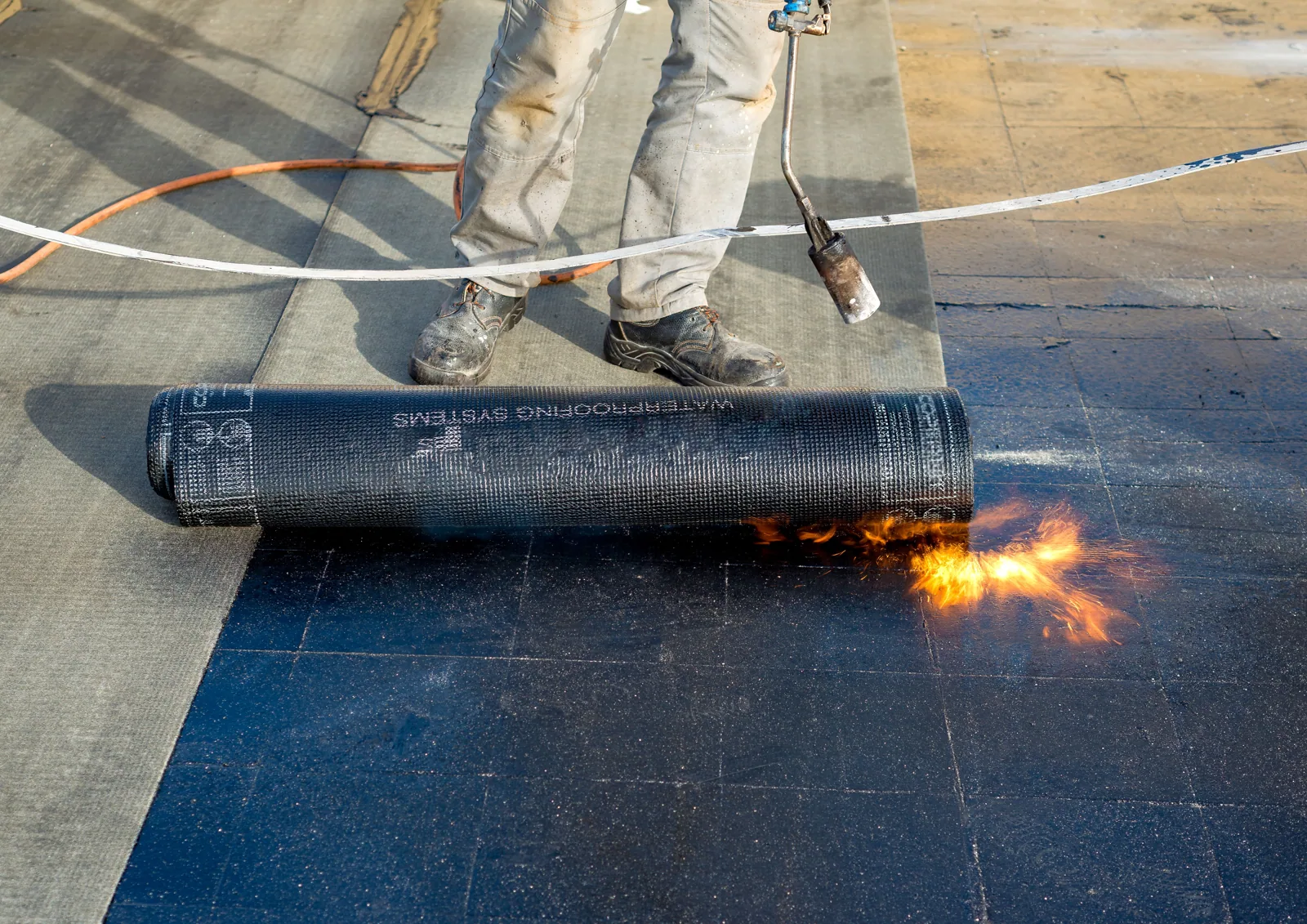
From the deck up: a vapor retarder or base sheet, insulation, a base ply, two or more interply layers of felt set in hot asphalt or cold adhesive, and a surfacing. The surfacing is either a flood coat of asphalt with embedded gravel, or a mineral-surfaced cap sheet. The gravel shields the asphalt from sun, adds fire resistance and adds weight. The cap sheet does the same job without the stone.
Each ply is a layer of redundancy, and each one is another place the crew has to keep dry while the roof is open. If the top one is damaged, the ones below keep shedding water for a while. That is why a well-built BUR has a reputation for toughness, and also why a leak in one can travel a long way between plies before it shows. A modified bitumen roof uses similar logic with factory-made sheets, and the two are often compared for the same building.
What happens to the gravel at tear-off?
Gravel complicates a tear-off. Stone weighs a lot, it migrates to drains and it must be swept, bagged or vacuumed before the plies can be cut. We plan the sequence around it: sweep the section, bag the stone, cut and lift the plies, then check the deck. Loose gravel on a roof is a slip hazard for crews, and the sweep is done with fall protection and a spotter at the edge, and it can clog drains if it reaches them, so the drain bowls are covered during the sweep.
Disposal is its own line on the bid, and for a gravel roof it can be the largest single cost after the membrane. Gravel, felts and asphalt go to separate streams where the haul contractor requires it, and the weights are logged. The crane or conveyor picks out the debris in containers that stay on the staging area until full. Dust and fumes are managed with covers over intakes and care with the kettle. Anything torn off is gone by the end of the day, and anything exposed is sealed.
Flashings are replaced with the field. Old base flashings carry asphalt that has hardened and cracked, and leaving them in place under new work puts the oldest material at the most leak-prone spots. We strip them to the substrate at walls and curbs, set new base flashings in step with the plies and cap them with metal or a second flashing course. That is slow work, and it is where most built-up leaks start, so the crew leader checks it twice, once as it is built and once at the closeout walk.
Can an old built-up roof be repaired instead of replaced?
Often, yes. Blisters, splits at flashings and worn spots can be cut out, dried and patched with new plies and a surfacing. A roof with a sound base, dry insulation and a few failed details gains years from a careful repair. The patch is built like the roof around it: new felt lapped over old, hot asphalt or adhesive between the plies, and a surfacing that matches the field so the repair sheds water the same way. The patch is photographed with a tape measure beside it, so the next walk can tell whether it has moved. We locate the damage, open the roof in small areas, remove wet material and rebuild the plies in order, with each layer overlapping the one beneath.
When wet insulation spreads, patches stop being enough. The core and the moisture scan show the extent, and the report puts the repair cost beside a section replacement and a full tear-off. A roof recover is possible over some BUR roofs if the layer count, deck and insulation allow, and a cover board goes between old and new. A commercial roof repair that ignores wet board will fail again within a season or two.
How does the wet season change the BUR sequence?
Tacoma's roughly 155 wet days add up to about 40.8 inches, and Auburn's year totals 37.1 inches, wettest in November and December and driest in July. Hot asphalt on a damp surface traps moisture, and the trapped water later blisters the plies. So BUR is best laid in the dry stretch, and in other months the day's area is small, the felts stay covered until laid and the sections are sealed by evening.
Summer heat stays modest in Federal Way, with no monthly average above 71.6°F, so asphalt softens little in service and a gravel-surfaced roof holds its shape. Wind is another matter: with 74 mph recorded at Enumclaw in the November 2024 bomb cyclone, gravel stops and edge metal are fastened for that kind of storm, and loose stone is swept up afterward.
Where do built-up roofs turn up around here?
Older commercial stock is where a core is most likely to find one. Only a core can confirm the layer count. Cores are cut at the low corners, at the drains and out in the field, and each log is filed with the roof plan so the next owner sees the same layers. Older warehouse and distribution space in the Kent Valley, Auburn and Fife can hold a BUR roof too.
The 2021 International Building Code, with Washington amendments last effective March 15, 2024, and the 2021 commercial energy code both apply. Both bear on a tear-off and replacement, so the plan reviewer joins the conversation early. Owners in Auburn and Kent can send the roof plan and the schedule, and our superintendent walks the sequence, staging and tie-ins with theirs.
Commercial Roofing Questions
How many layers can a building carry before a tear-off is required?
Code limits the number of layers, and many jurisdictions allow one recover over a single existing roof. We cut cores to count layers, check the deck and confirm the limit with the plan reviewer before recommending a recover.
Is a gravel roof harder to inspect?
Somewhat. Stone hides blisters and splits, so we sweep test areas and use infrared to find wet insulation. After storms, we check that gravel has not migrated to drains or edges.
What causes blisters in a BUR?
Trapped moisture or air between plies that expands in sun. Small blisters can be cut and repaired. A field of blisters suggests wet insulation, and we investigate before patching.
Does the kettle smell reach the building?
It can. We use covers over intakes, keep the kettle away from air handling and warn the facilities team before hot work. Low-odor adhesives replace hot asphalt where the roof allows.
Is BUR still a good choice for a new roof?
On the right building, yes. Its redundancy and track record appeal to some owners. Others choose single-ply, such as TPO, for speed and cost. We lay out both against the owner's plan for the property.
Send the roof plan and any core information
Send the roof plan, the age of the existing system and the layer count if you know it, along with the project schedule, so we can walk the sequence, staging and tie-ins with your superintendent before a number goes on paper.