Roof Systems
Modified Bitumen Roofing in Federal Way, WA
A modified bitumen job begins with a question about fire. Before anyone lights a torch, the superintendent walks the deck, checks what sits under the roof edge and decides whether open flame belongs on the job at all. Modified bitumen is asphalt blended with polymers, reinforced with polyester or glass and laid in two or more layers. It is a tough, repairable roof, and it can be installed by torch, by hot asphalt, by cold adhesive or by self-adhesion. On a Federal Way, WA building, the method follows the roof, the occupants and the rules of the owner's insurer.
The order then goes as usual. A moisture scan and cores come first, then paint marks for the tear-off limits, and every section is stripped, insulated and covered the same day.
What is the difference between SBS and APP?
SBS is modified with a rubber-like polymer, so it stretches and recovers, which helps it handle movement and cold. APP is modified with a plastic-like polymer, so it resists heat and sun and holds a firm surface. Both are sold as rolls with a granule or film surface, and both are used in two- or three-ply assemblies with a base sheet and a cap sheet.
Which one fits depends on the roof. SBS suits roofs that see movement and cold, and it takes torch, adhesive or self-adhered methods. APP often goes on by torch and does well where sun exposure is high. Here, where summer months stay under a 71.6°F average, heat worries us less than moisture and foot traffic, which makes SBS a reasonable starting point. We choose by reading the roof and the use, not by habit.
Layers matter as much as type. A two-ply system gives redundancy: if the cap sheet is damaged, the base sheet still sheds water. A three-ply system adds a second base layer, which helps over uneven substrates. We specify the plies from the deck and the use, and we record the layer count on the plan, so a future repair crew knows what a core will show before they cut it.
How is it installed, and what changes the method?
Torch application melts the underside of the sheet as it is rolled out, which makes a strong bond but puts open flame on the roof. Hot-mopped asphalt does the same with a kettle. Cold-applied adhesive and self-adhered sheets avoid flame and suit buildings where fire risk is a concern or where combustibles sit near the roof edge, which is common on older buildings with wood trim or foam in the wall cavity. They need clean, dry, primed surfaces and enough temperature to cure.
Hot work needs a permit, a fire watch during and after the work, and extinguishers at hand. We check the roof edge, parapet cavities and penetrations for combustibles before anything is lit, and we do not torch near wood or foam that cannot be protected. If the owner or insurer prefers a flameless method, we price one. The method is written on the plan for the roof, and the crew leader keeps the permit and watch log on site, where the owner's representative can read them at any time during the job. A built-up roof uses similar materials and the same fire discipline.
What makes a lap and a flashing hold?
Laps are where the sheets overlap, and a good lap shows a continuous bead of melted asphalt along its edge. Dust, moisture or a cold sheet spoils it. The crew cleans the lap, warms the sheet and presses the edge down with a roller. At side laps and end laps, the cap sheet is staggered from the base sheet so seams do not line up through the roof.
Flashings take the same care. Base flashing climbs the wall or curb in a separate sheet, tied into the field with a lap and fastened at the top. The cap flashing adds a second layer. We probe every lap once it cools, mark any gap and repair it before the day ends. Granule loss at a lap or a drain is photographed as well, so the next walk can compare the cap sheet against what it looked like at closeout. Photographs of the flashings, curbs and drains go into the closeout record, along with the permit, the fire watch log and the weather on each day, so the file shows how and under what conditions the roof was made. A roof drain and scupper detail is built last and checked first at the closeout walk, since water leaves the roof through it.
How does the wet season shape the work?
Auburn is rained on to the tune of 37.1 inches a year, with November and December wettest and July driest, and Tacoma runs about 40.8 inches over roughly 155 wet days. Modified bitumen goes down on a dry deck and a dry base sheet, because trapped moisture turns to vapor under hot asphalt and blisters the sheet. So the crew covers materials every evening, keeps the open area small and seals every section with a temporary tie-in before leaving.
For edge work the reference is the 74 mph the November 2024 bomb cyclone put on Enumclaw, the highest of any Washington community: metal flanges fastened and cover strips set. After any storm, the crew walks the edges and corners. A wind-damaged roof usually begins failing at those places, and the sooner they are inspected the smaller the repair.
Where does modified bitumen show up locally?
School roofs are one place it turns up, and Federal Way Public Schools is among the city's largest employers. Hospitals such as St. Francis and Virginia Mason Federal Way Medical Center need dependable roofs with hot work rules that fit patient care. Retail stock at The Commons and the Pavilions Centre strip mall, and warehouses in the Kent Valley, Auburn and Fife, may include roofs of this type, and each needs reading before anyone assumes its system.
Insulation and edge details are set against Washington's amended 2021 building code and the commercial IECC. For an owner in Des Moines or Federal Way West Campus, the plan and schedule come first, and the two superintendents go over staging and tie-ins before there is a price.
Commercial Roofing Questions
Do you have to use a torch?
No. Cold-applied and self-adhered methods avoid flame and suit buildings with fire risk. They have temperature and moisture limits, and we choose with the owner and the insurer. Torch work needs a permit and a fire watch.
Is modified bitumen a good choice for a school?
It can be, because it is durable and repairable. Schools often have summer windows, and July is the driest month in the region. Hot work rules and school security are part of the plan.
How can I tell SBS from APP on an existing roof?
By the surface and the feel of the sheet, the labels on the edge and a small sample if needed. Repairs depend on the type, so we confirm before choosing a method.
Why do bitumen roofs blister?
Trapped moisture or air under the sheet expands when heated. Blisters show where the base was wet or a lap was poorly bonded. We cut and repair them, and we find the source.
Can a bitumen roof be coated?
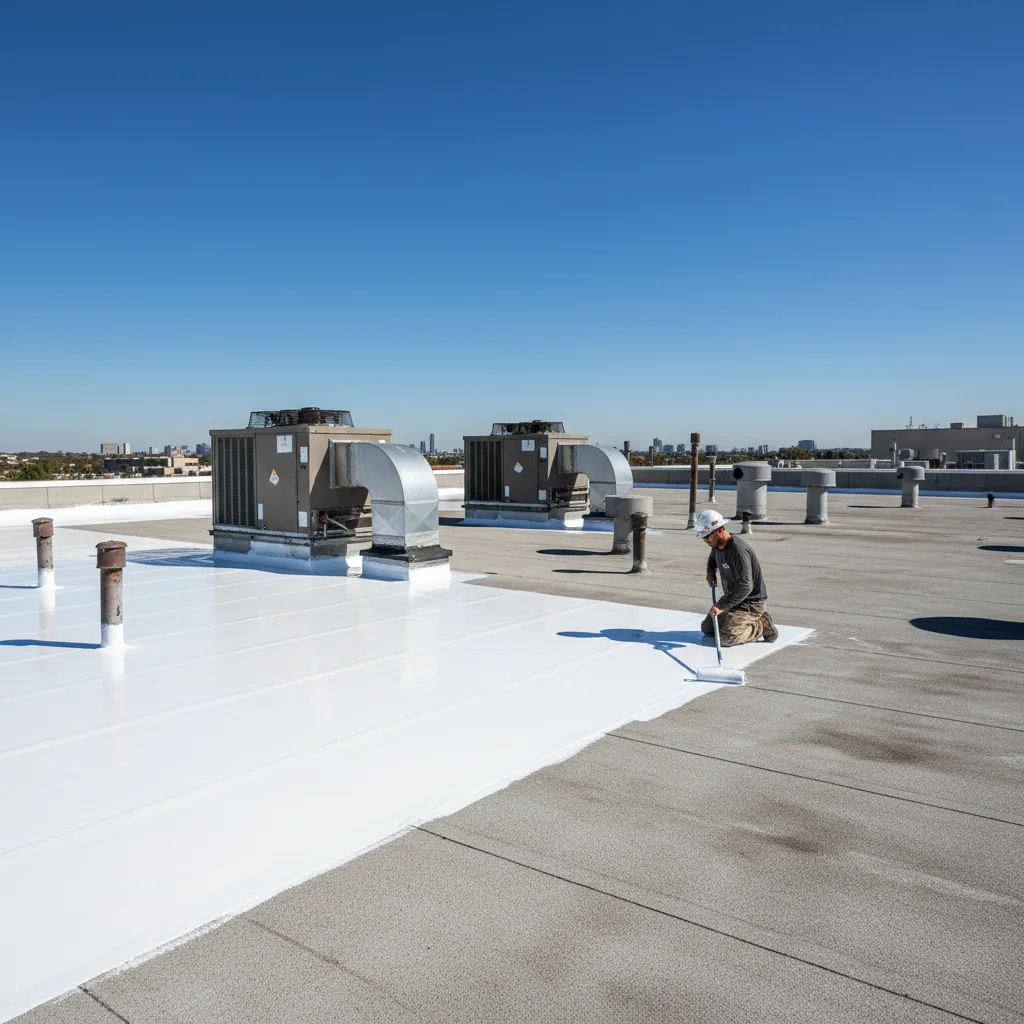
Yes, if the surface is sound and clean. A reflective coating, such as a silicone coating, can extend life and cut heat. The coating must suit the cap sheet, and we test the surface before choosing.
Send the roof plan and the fire rules
Send the roof plan, the insurer's hot work rules and the project schedule so we can walk the sequence, staging and tie-ins with your superintendent before a number goes on paper.