learn more
ABOUT COMMERCIAL ROOFING FEDERAL WAY
Cores, pull tests, and a marked drawing come before anything else on a commercial roof in Federal Way, WA, and the person who runs them is a superintendent with the plan in hand. That habit shapes the rest of our work. We repair, replace, recover, restore, coat, inspect, and maintain low-slope and metal roofs, and every job begins with cores, fastener pull tests, and a marked drawing of where the work will start and stop. Owners, property managers, and general contractors get a plain sequence they can follow: what happens first, what it depends on, and what comes next.
We work on occupied buildings and plan around tenants, deliveries, and schedules. Emergency response runs around the clock, all week, holidays included, because water does not wait for a business day.
What happens on the first walk?
The superintendent reads the roof against the drawings. Cores show the layers, the insulation, and the deck. Fasteners are pulled to see what they are holding. Drains, scuppers, curbs, and edges are checked for the details that fail first. If the owner wants more than a visual walk, we add drone photography and an infrared moisture survey to map wet insulation without cutting the roof open.
The result is a written record with photographs tied to locations. It names the membrane, lists the repair items in order, and states what the deck can carry. Owners use that record to choose between a repair, a recover, and a full replacement, and the same record goes into the building's file for the next walk.
How do tear-off limits and staging get set?
Before any panel or membrane comes off, the tear-off limits are marked in paint and the staging area is agreed with the owner. A lay-down yard on a retail lot along SR 99 is a different problem from one at an industrial building, and a crane pick at a medical building needs a different notice than one at a warehouse. Truck routes, lift position, debris containers, and tenant parking are settled in the preconstruction walk with the owner's superintendent.
The goal is that nothing on the first day of work is a surprise to the people who run the building. Neighbors on a shared lot are told which lane closes and for how long. The crew leader stays reachable by the property manager, and the day-one punch list starts as soon as the first section is open. Dry-in follows the tear-off in the same shift: insulation and membrane go down over each opened section, edges are fastened, and a temporary seal covers anything that cannot be finished before dark.
How does the wet season shape the schedule?
Federal Way summers stay mild, with no monthly average above 71.6 F, and the rain arrives in fall and winter. Auburn, along the Green River corridor, records 37.1 inches in a year, led by November and December, while July is nearly dry, and Tacoma runs to about 40.8 inches across roughly 155 wet days. Between October and March a crew works in short dry spells, and the day's opening is limited to what can be sealed before dark.
Larger replacements are often set for the drier months, and repairs continue through the wet season with temporary seals and smaller sections. Wind earns its own line in the plan. The November 2024 bomb cyclone drove Enumclaw to 74 mph, the state's highest, so edge metal, perimeter fasteners, and corner zones are specified and checked with care on every roof.
Which buildings do we work on?
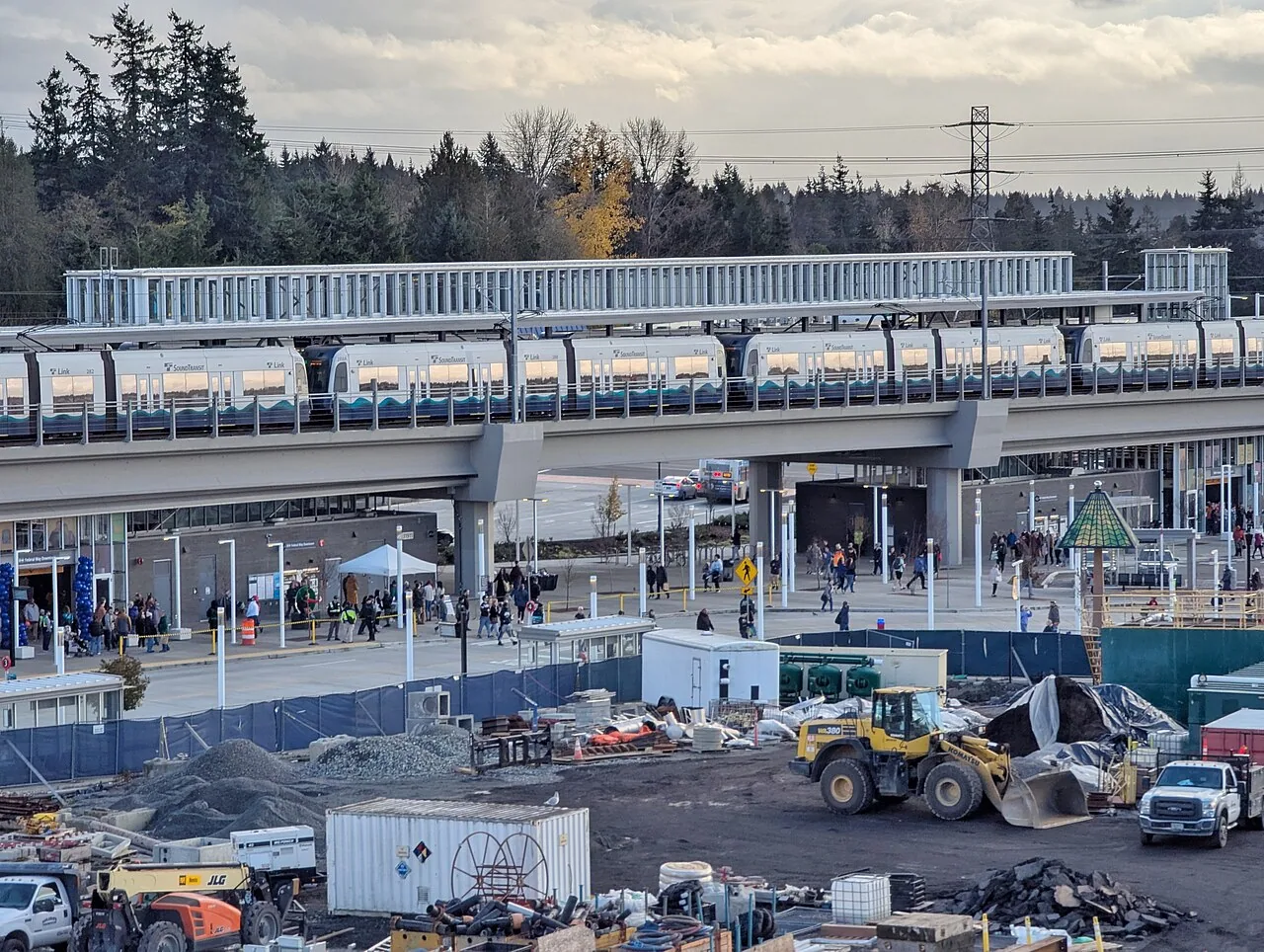
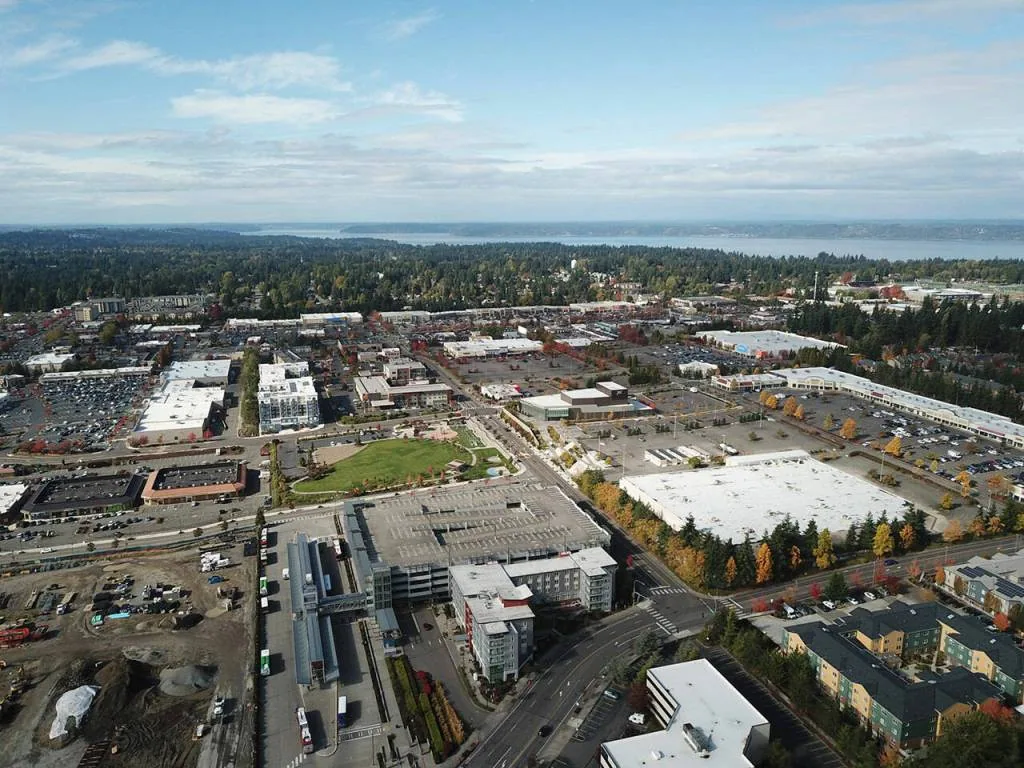
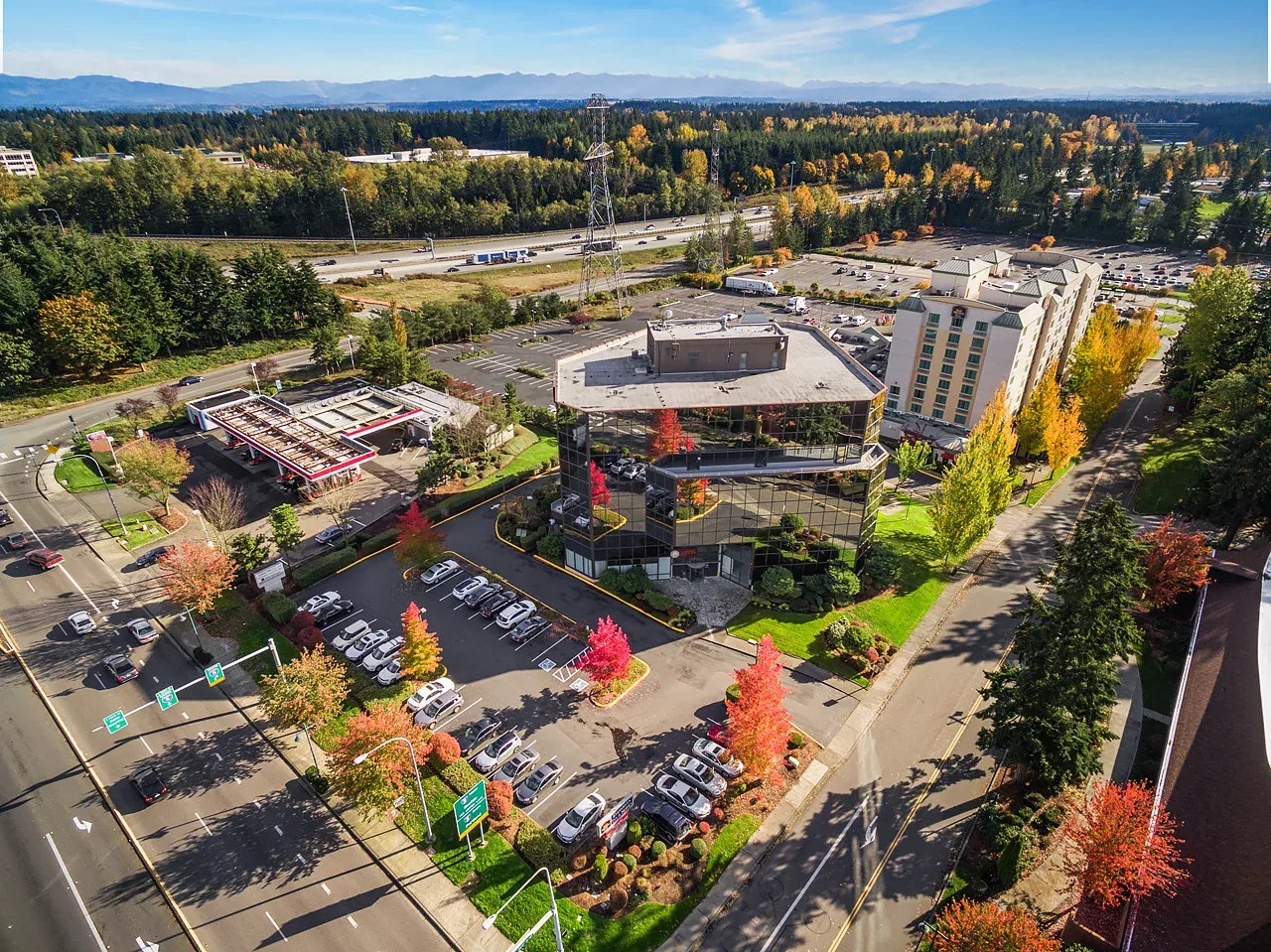
The mix here is wide. Woodbridge, the industrial park that Industrial Realty Group is developing on part of the roughly 400 acre former Weyerhaeuser campus, adds new buildings. Retail is led by The Commons indoor mall and the Pavilions Centre strip mall, and SR 99 is the main commercial strip. Healthcare comes from St. Francis Hospital and Virginia Mason Federal Way Medical Center. Beyond the city limits, the Kent Valley, Auburn, and Fife contribute warehouse, distribution, and aerospace manufacturing space.
That variety means a warehouse roof, a shopping center roof, and a hospital roof each get their own sequence. Joint Base Lewis-McChord sits roughly 20 to 25 miles south-southwest, and work on a base follows its own access, badging, and escort rules, which we plan into the schedule at the start.
What do permits and codes add?
The state's 2021 International Building Code carries its own amendments, the latest effective March 15, 2024, and the 2021 International Energy Conservation Code governs commercial buildings through Chapter 51-11C WAC. A repair that stays inside the existing assembly rarely changes code review. A replacement can bring insulation values and permit steps into the plan, and we confirm the requirements for the actual scope before pricing.
Owners who hold roofs across several buildings benefit from a record of what was permitted and what was installed. It shortens the next project and answers questions from lenders and insurers. We keep the permit paperwork, the product list, and the inspection photographs together so the file is complete when the work is done.
What does closeout look like?
The closeout walk goes with the owner's superintendent, one tie-in at a time. Photographs of each edge, curb, and drain are added to the record, with a list of products used and any items left for a later budget. If a condition report is part of the scope, it is delivered with the final photographs. Owners who want continued care can set up preventive maintenance, which clears drains and checks details on a schedule before the October rains. For storm events, the same record supports an insurance claim.
Questions from Federal Way Building Owners
Who is the contact on a job?
The crew leader runs the roof each day, and the superintendent answers questions on sequence and scope. Owners and general contractors get one number for each, so questions go to the right person the first time.
How does a tenant keep working during the job?
Yes, with a plan. We set work zones around tenants and deliveries, protect interiors below the work, and schedule noisy steps for approved hours. The owner receives a daily note on where the crew is working.
What if it rains in the middle of a job?
Temporary seals stay ready on the roof, and the opening is held to what can be sealed that evening. If rain arrives early, the crew closes the open section, holds the work, and resumes on the next dry window.
What systems do you install?
TPO, PVC, EPDM, KEE, modified bitumen, built-up, standing seam and retrofit metal, spray foam, and silicone and acrylic coatings. The core cuts and the building's needs decide the match.
What do I send to get started?
The roof plan if you have one, the leak locations, the building hours, and any dates that matter. If you have none of those, we begin with a walk and build the record from the deck.