Roof Systems
EPDM Roofing in Federal Way, WA
With an EPDM roof, the superintendent walks the seams first. EPDM is a synthetic rubber sheet, usually black, that comes in wide rolls and covers a large low-slope roof with very few joints. The sheet itself is tough and stays flexible in cold weather. The joints are where it can fail, so the plan for an EPDM job on a Federal Way, WA building is mostly a plan for seams, flashings and the way the sheet is held down.
Before any of that, cores and a moisture scan tell us whether the old roof can stay. Then come the tear-off limits in paint, the crane pick and the staging area. Each section is torn off, insulated and covered the same day, with a temporary seal at the work limit.
How is the sheet held to the roof?
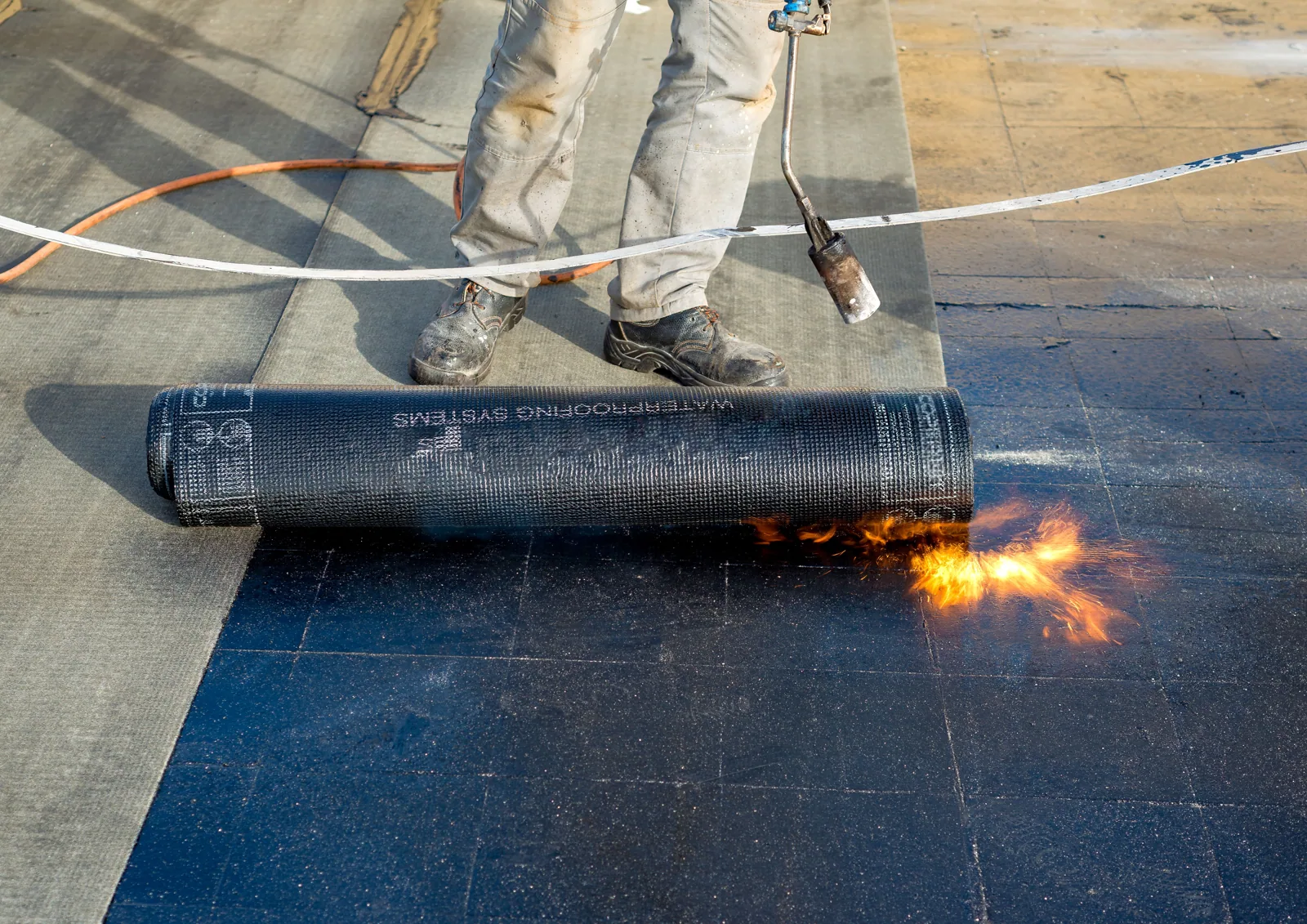
Three methods dominate. A fully adhered system bonds the rubber to the substrate with bonding adhesive across the field, which gives a smooth, quiet surface that resists flutter. A mechanically attached system fastens the sheet along seams with plates and screws, which is quick on large roofs. A ballasted system lays the sheet loose and holds it with rounded stone or pavers, which needs a deck that can carry the added weight.
The choice follows the building. A roof with a light deck and high wind exposure favors adhesion or fastening. A deck with plenty of capacity and a long, simple plan can take ballast. We walk the deck, run fastener pull tests, check the drawings and then write the attachment to what the structure can bear. On an older building, a built-up roof underneath may carry gravel that has to be swept and bagged first, and the weight of that gravel is part of the tear-off plan. For a recover, the old roof has to stay dry, and the roof recover sequence adds a cover board between old and new.
What makes an EPDM seam hold?
EPDM does not melt together the way a thermoplastic does. Seams are joined with factory-applied tape or with splice adhesive and a cover strip. Both depend on clean, dry, primed surfaces and enough pressure to make contact. A seam made in damp air, on a dusty sheet or with the wrong primer can look fine on the day and open within a season.
The crew wipes the laps, primes them, lets the primer flash off and presses the seam with a hand roller along its full length. The crew leader checks a section every day by probing the edge and by looking for fish-mouths and wrinkles. Flashings at curbs and pipes are made with formed or prefabricated pieces and sealed at the top. We photograph each detail before it is covered. A TPO roof gets welded seams; EPDM relies on the chemistry of the tape and the care of the hands that apply it. Cold mornings slow splice adhesive and tape alike, so seams get first call on the day's best hours when the temperature is marginal.
How does a wet winter treat the membrane?
Rain does not trouble the sheet itself: Auburn takes 37.1 inches a year, peaking in November and December, and Tacoma takes 40.8 inches over roughly 155 wet days. The risk is during installation, when moisture on a lap spoils a seam and water in the insulation below spoils the roof. That is why the best time for the work is the dry summer and why autumn and winter jobs are planned around the forecast.
In wet months, the crew works smaller areas, covers materials every evening and does not open more roof than the day can seal. Splice adhesives need dry surfaces and moderate temperatures, and we hold the work when conditions fall outside the product range. With no month averaging above 71.6°F in this warm-summer Mediterranean climate, a dark membrane sees little heat stress, which is one reason EPDM does well here.
What punctures or damages an EPDM roof?
Foot traffic, dropped tools, sharp debris and chemicals. EPDM is tough, yet it can be cut, and oils or solvents can swell the rubber. Roofs with heavy service traffic around rooftop units wear paths into the sheet. We lay walk pads where the paths run and check them at each visit. A contrasting pad also works as a visual guide that keeps technicians on the planned route and off the seams.
Repairs are simple when the roof is clean and dry. We cut a patch with rounded corners, prime both surfaces, apply tape or adhesive and roll the patch. For old EPDM, we check whether the rubber still takes adhesive well, because aged sheets sometimes resist new bonds. A test patch on a clean corner, left overnight, tells us whether a bigger repair will hold or whether the sheet has reached the end of what patching can do. A membrane puncture repair near rooftop equipment is logged on the roof plan, and repeated punctures in the same zone suggest a traffic or debris problem that a patch will not fix.
Where does EPDM suit local buildings?
EPDM favors large simple roofs, among them warehouse and distribution space around Kent, Auburn and Fife and big-box retail, a category that takes in city employers like Walmart and Costco. School roofs, with Federal Way Public Schools among the city's largest employers, are another fit where plans are simple and traffic is light.
The scope confirms insulation and curb heights against the state's amended 2021 International Building Code and its commercial energy code. Owners in Auburn and Federal Way City Center can send the roof plan and schedule, and their superintendent walks the sequence, staging and tie-ins with ours. A commercial roof replacement in EPDM follows that order: cores first, tear-off limits next, then insulation, cover board and sheet in sections, with a temporary seal at every limit.
Edges decide how an EPDM roof ages. The sheet turns up the parapet or ends at a metal edge, and a termination bar or a flashing strip holds it. Water finds an open top edge in a hurry. We check the bar, the sealant above it and the coping or edge metal over it, and we fasten each at the spacing the wind exposure calls for. That edge detail is checked first at every closeout walk and again after the first winter storm.
Commercial Roofing Questions
Is a black EPDM roof too hot for this climate?
Not in Federal Way, where summers are mild enough that a dark sheet sees little heat stress. Owners who want a reflective surface can choose a white EPDM or a different membrane.
Should I choose ballasted or adhered EPDM?
Choose by the deck and the wind. Ballast needs a structure that can carry the weight and a roof plan with clear drainage. Adhesion suits lighter decks and windier sites. We check the structure and exposure before recommending.
How long will seam tape last?
With clean surfaces and good pressure, tape seams are durable. Poor prep, dust and moisture shorten their life. We inspect seams after the first winter and at regular intervals.
Can EPDM be repaired when it is old?
Often, if the rubber still bonds. We test an adhesive on a small area before committing. Old, chalky sheets may need larger repair or replacement.
What if an oil leak reaches the roof?
Tell us quickly. Oils and solvents can swell EPDM, and we may need to clean or replace the affected area. We document the spill's extent and propose repair.
Send the roof plan and the age of the roof
Send the roof plan, the age of the existing system and the project schedule so we can walk the sequence, staging and tie-ins with your superintendent before a number goes on paper.