
Roof Damage Repair
Membrane Puncture Repair in Federal Way, WA
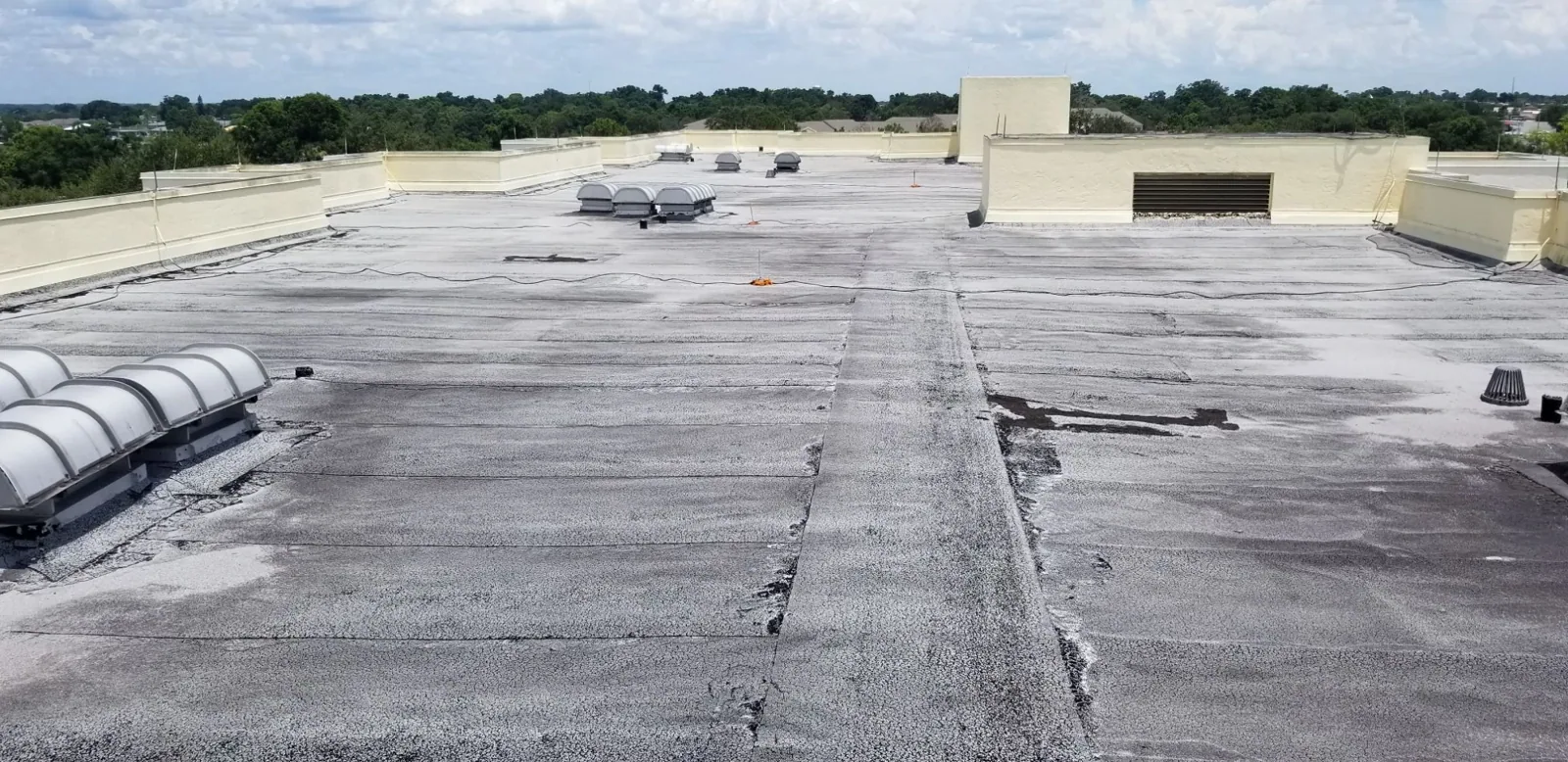
Punctures are found by walking, not by looking. The superintendent walks the deck slowly, with the plan in hand, scanning the membrane for dark spots, dents, cuts and scuffs, and pausing at every place where people and equipment have been. A hole the size of a pencil lets in a cup of water in every rain, and the water travels along the deck before it shows inside. In Federal Way, WA, a puncture seldom stays dry for long, since nearby Tacoma has roughly 155 wet days a year. The repair is a small one, but the finding comes first, and the finding takes patience.
How do we find every puncture on a large roof?
We walk the roof in a grid, section by section, with the plan marked as we go. Service routes to rooftop units get the most attention, along with the areas around hatches, ladders and drains. We look for punctures from dropped tools, cuts from sharp debris, abrasion from dragged equipment and scuffs from repeated foot traffic.
Moisture tells us what we cannot see. A scan with an infrared moisture survey shows wet insulation under the roof, which marks the places water has already entered. Cores at the suspected points confirm it. Each puncture and each wet area is photographed against the numbered plan, with its size noted, and the findings are ranked by what they would reach.
Edges of repairs from earlier visits are checked as well. A patch that has lifted at a corner, or a patch placed over wet board, is itself a source of leaks. We press every old patch, lift any that moves and look under it. Where a patch has failed, a flashing failure repair or a seam repair nearby often explains why, and the cause is fixed with the patch.
When is a patch enough and when does insulation come out?
A puncture in a dry area is patched. The membrane is cleaned, and a patch that extends well past the damage is welded or adhered, with rounded corners so it does not lift. The patch material matches the roof system. A puncture that has let water into the insulation needs more: the wet board is cut out, the area is dried and new board goes in before the membrane is repaired.
The limits are marked in paint after cores come up dry on all sides. A hole that has been open for months can wet a large area, and the scope grows accordingly. The crew leader reports the extent the same day, with photographs and a price, so the owner can approve the added work before the roof is closed.
Patch size follows the damage and the system. A small puncture gets a patch that clears the hole by a few inches on every side. A long cut gets a strip. A cluster of scuffs on a service route may call for a section of new membrane, welded in with sealed edges. The plan shows each patch by number, so the owner can approve them one at a time or as a group.
How do we protect the roof while we repair it?
The crew lays walk pads from the access point to the work, so the repair does not add punctures. Tools are kept in trays, not set on the membrane, and scrap is collected in bags. The lay-down area sits at the edge of the lot, away from entrances and fire lanes.
On a retail center along Pacific Highway South, rooftop units bring service technicians across the membrane all year. At a Woodbridge industrial building on the former Weyerhaeuser campus, the roof is large and the walk routes are long. In both cases the staging drawing names the route, the walk pads and the person who holds the roof hatch key. A commercial roof repair visit usually bundles several small items into a single trip.
The crew keeps a list of everything carried onto the roof and checks it at the end of the visit. A dropped screw or a cut-off scrap left behind is how the next puncture starts. Materials ride up in bags and trays, and the hatch is secured when the crew leaves. The manager gets a short note with photographs of the repaired spots.
How do we keep water out during the repair?
The open area is a patch, not a section, so dry-in is simple. We clean the area, dry it, set the patch and test it. If rain threatens, a temporary patch goes on and the permanent one waits. Rain is heaviest in Auburn in November and December and lightest in July.
Wet-season repairs need a dry surface to bond. The crew works under a tent, waits for a dry hour or applies a cold-applied patch that tolerates dampness, depending on the system. Each patch is probed and, where the system allows, tested with water before the crew leaves. The log records the weather, the patch type and the time of the test.
Hot work is limited around a wet or damp roof. The crew leader checks the surface with a moisture meter before heat goes on, and a cold-applied method is chosen when a heat-welded patch would trap moisture. Temperature matters, too: adhesives need the range the manufacturer lists, so cold mornings start late.
How do we prevent the next puncture?
Prevention is cheap. Walk pads go along service routes and around hatches. Protective mats go under refrigerant lines and conduit that rest on the roof. Sharp edges on equipment curbs are filed or covered, and loose debris is cleared from the surface. A rooftop equipment curb and support upgrade keeps lines off the membrane.
Where punctures keep recurring in the same place, a heavier cover layer is considered, such as a cover board and a thicker membrane at the next replacement. Wind-blown debris is another source, and the November 2024 bomb cyclone, with 74 mph at Enumclaw, showed how much can fly. The crew checks the roof after storms for that reason.
What does the closeout walk confirm?
The closeout walk confirms that every marked puncture is repaired and tested. The package lists each patch with its location, size and type, with photographs before and after. It also notes where walk pads were added and where the next routine check should look.
For owners with buildings in Kent and Auburn, the same format applies to every roof. A seam failure repair or a flashing repair found on the same walk is logged in the same file, so the roof's record stays in one place.
The package states how many punctures were found and where the traffic was heaviest. That tells the owner which routes need walk pads and which units draw the most visits. A short list of preventive changes closes the file, with prices, so the owner can approve them with the repair or later.
Commercial Roofing Questions
How can a small hole cause a big leak?
Water enters, spreads through the insulation and travels along the deck. It may show inside far from the hole, and wet insulation then holds water for years.
Are all punctures patched the same way?
No. The patch matches the system: heat-welded on thermoplastic, tape or cured patch on rubber, reinforced cap on modified bitumen.
How do you know whether insulation is wet?
Infrared scans and moisture readings find it, and cores confirm it. Wet board is cut out and replaced before the membrane is repaired.
What stops punctures from happening again?
Walk pads on service routes, mats under lines and conduit, filed edges on curbs and debris cleared after storms.
Does a puncture repair affect the warranty?
It can, if the repair does not follow the manufacturer's rules. We read the warranty first and use approved methods.
Send the roof plan and a photo of the damage
Send the roof plan, a photo of the damaged area and the service routes. We will walk the sequence, staging and tie-ins with your team before a number goes on paper.
