
Service Areas
Commercial Roofing in Enumclaw, WA
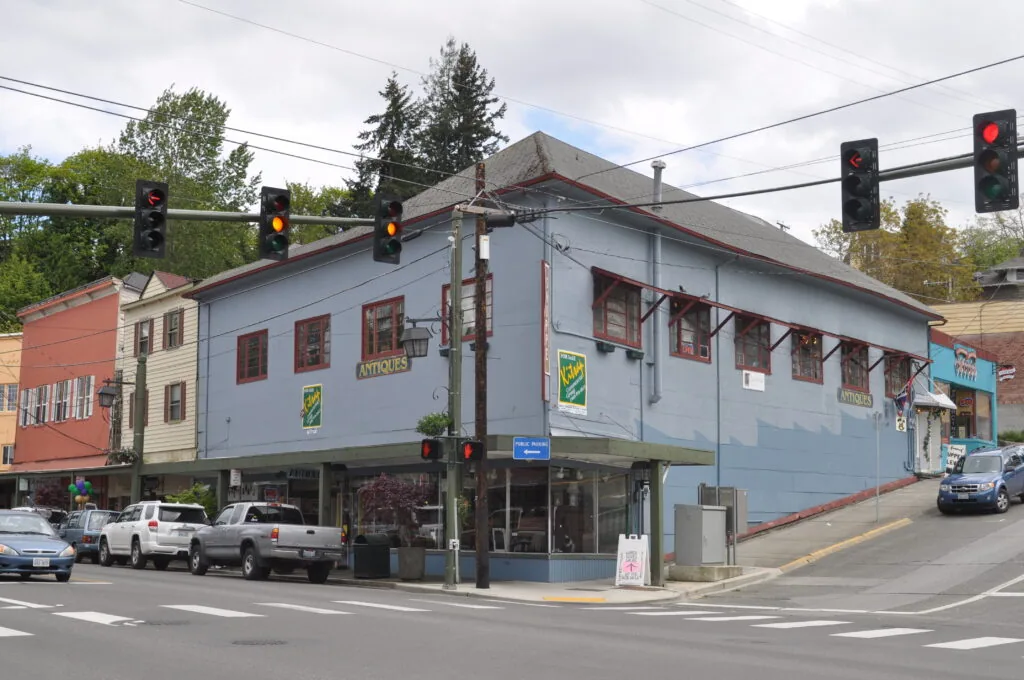
Edge metal is the first thing a superintendent tugs on when he walks an Enumclaw roof, because this is the town where the November 2024 bomb cyclone brought 74 mph winds, the highest of any Washington community. Enumclaw sits in the Cascade foothills on SR 410, the gateway to Mount Rainier National Park and Crystal Mountain. Winters run about 5 degrees colder than Seattle, with roughly 6 to 8 inches of snow a year, and the 72-acre Enumclaw Expo Center hosts the King County Fair.
Wind, cold and a little snow add up to a roofing problem that is different from the one in the valley cities to the west. Our crews reach Enumclaw from Federal Way, WA, and the roof plan weights the perimeter, the fasteners and the freeze cycles as heavily as the membrane.
What does a 74 mph wind do to a commercial roof?
Wind lifts a flat roof from the edges. The perimeter and the corners take the first uplift, and once an edge opens, the membrane can peel back across the field. After a storm of that strength, a roof can show loose coping, bent edge metal, lifted flashing and fasteners that backed out of the deck. We walk every edge, press the membrane near the perimeter and pull-test the existing fasteners.
For repairs, the sequence matters. Loose metal is secured first, because a panel that moves again can damage the membrane. Then the membrane is reattached, flashings are re-sealed and the field is checked for tears. A wind damage roof repair that only patches the field leaves the edge open for the next storm, so the edge work leads the job.
Where the existing edge cannot be saved, we replace it with metal that meets the current wind-uplift standard for the building, and we fasten it into the wall or the nailer at a closer spacing along the corners. The old membrane is cut back to sound material, the new edge is tied in and the seam is checked. Each step is photographed so the owner and an insurer can see the condition before and after, with dates.
How do colder winters and snow change the roof plan?
Winters in Enumclaw run about 5 degrees colder than Seattle, and the town sees roughly 6 to 8 inches of snow a year. That is modest snow, but it brings freeze and thaw cycles that work at seams, flashings and drains. Water gets into small openings, freezes and widens them, and the damage shows up as a leak in the next thaw.
On the first walk we look at the places where meltwater collects: low spots, drains and the ground side of curbs. We clear and test drains so melt has a path out, and we check that scuppers and gutters are free of debris. If a roof has a pitched or metal section, we look at snow retention and at the seams where snow slides and adds load. Cold weather also limits when some adhesives and sealants can be used, so repairs are timed to the days that suit the materials.
Foothill weather also changes quickly. A morning that starts dry can turn wet by afternoon, so the crew leader checks the forecast before the first panel moves and again at midday. If the window closes early, the open area is sealed and the work resumes the next suitable day. For an owner, that means a schedule with a few spare days built into it, and a plan for what is left open overnight. An emergency roof repair follows the same rule: dry in first, make it permanent later.
When is the right window for a tear-off?
The nearest recorded numbers come from the Green River corridor, where Auburn totals 37.1 inches a year and its wettest months are November and December. Tacoma's record is about 40.8 inches across roughly 155 wet days. The pattern is clear. July and August are the preferred months for large tear-offs, and the rest of the year needs smaller sections and a close watch on the forecast.
In cold, wet weather the crew opens only the area it can close the same day, with a temporary seal staged at the edge, and in dry months it opens larger sections and finishes faster. Material waits off the ground under cover, and the seal gets a final check at the end of each shift. Membrane and insulation orders go in early, because a delay in October can push the work into the worst of the season.
How do events and tourist traffic affect staging?
SR 410 carries traffic toward Mount Rainier and Crystal Mountain, and the Expo Center hosts the King County Fair, so a roof job in Enumclaw may share the road with seasonal crowds. We ask the property manager about the busy weekends and plan the crane pick, the deliveries and the lay-down yard around them. Heavy steps happen on quieter days, and the entrances stay open for customers.
Owners of lodging, restaurants and retail buildings that serve visitors have a particular need: the roof should be finished before the busy season, not during it. That means a repair list in spring and a booked window in early summer, with a clear scope and a firm closeout date. Guests at a lodging property can arrive at odd hours, so the loud steps stay in daylight and the rooms under the work are held out of use when the manager agrees.
Repair, restore or replace: what does the owner weigh?
The cores settle this. A roof with dry insulation and sound attachment can take targeted repairs and a maintenance plan. A sound membrane with a worn surface can take an acrylic coating after seams are repaired. A roof with wet insulation or loose attachment needs a replacement, with edge securement designed for the wind.
Cost follows the wet area, the access and the attachment pattern. Higher attachment near the perimeter adds fasteners and labor, and it is the part of the job that earns its cost in a storm. A manager with property in Black Diamond or Maple Valley can put those roofs on the same plan.
Commercial Roofing Questions
What should I check after a high wind event?
Check the edges first: coping, edge metal and the membrane near the corners. Look for lifted or bent metal, open seams and debris on the roof. Photograph anything you find with the date, and call before the next storm so loose metal can be secured.
Does a few inches of snow matter to a flat roof?
The snow load itself is modest here, but meltwater is the concern. Drains need to be clear so melt leaves the roof, and seams and flashings need to be sound so freezing water does not widen small gaps.
Can you repair a roof in cold weather?
Some repairs can be done in the cold with the right materials, and some have to wait for a warmer day. We choose adhesives and sealants rated for the temperature and put a temporary seal on anything that has to wait, then return for the permanent repair.
How is an insurance claim documented after a storm?
The file holds dated photographs, moisture readings and a written scope that keeps storm damage apart from wear, and it goes to the owner and the insurer. Drying the roof in comes first, ahead of any review.
What does a closeout walk include?
At the walk your superintendent and our crew leader check every seam, curb, drain and edge together, and punch items are listed on the roof. The plan, photographs, product data and warranty paperwork follow.
Send the roof plan and the storm photos
Send the roof plan, photos of any wind damage and the weeks when visitors fill the area. We will walk the sequence, staging and tie-ins with your superintendent before a number goes on paper.