
Roof Systems
Acrylic Roof Coatings in Federal Way, WA
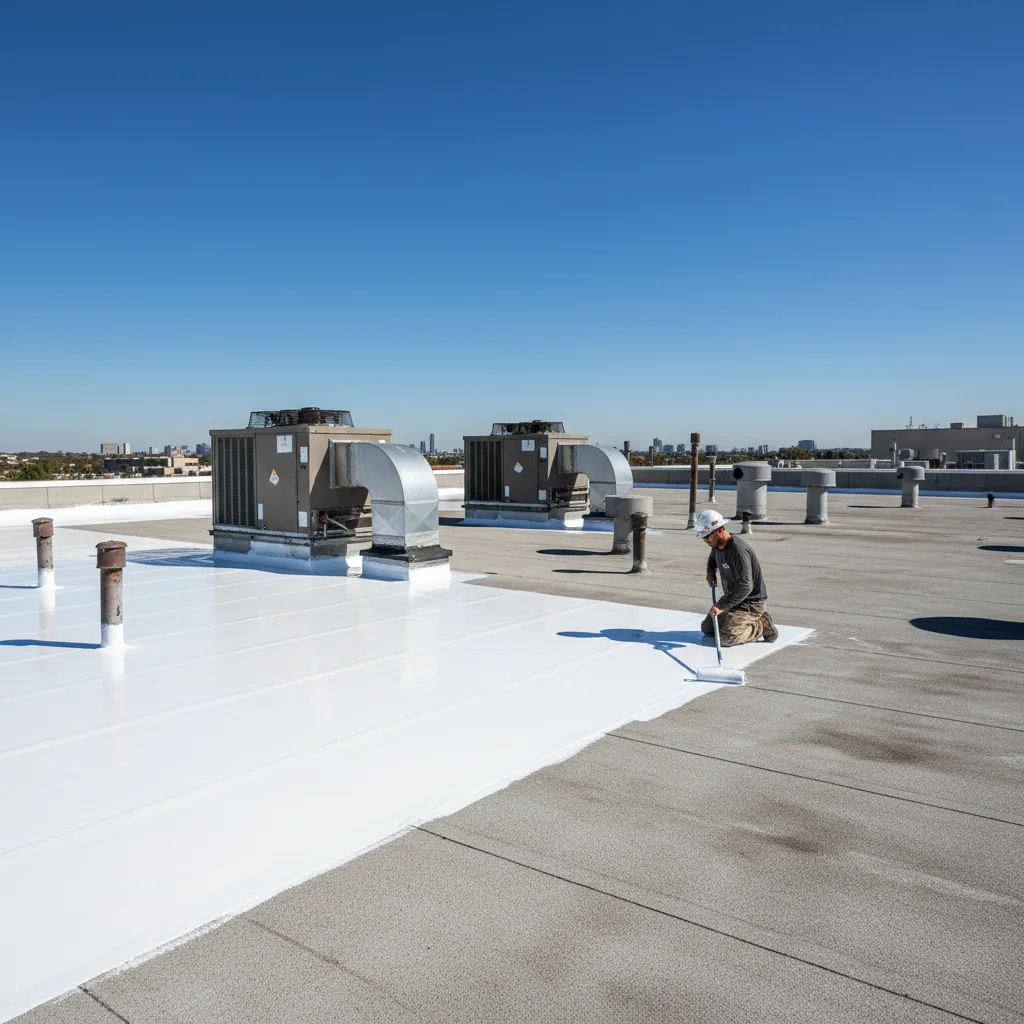
Before an acrylic coating job, the superintendent checks the weather for the three days after the crew finishes, not the day of the work. Acrylic is a water-based coating that dries by evaporation. It rolls on easily, cleans up with water and gives a bright, reflective surface. It also needs time to cure before rain hits it, and in Federal Way, WA, with long wet winters, a short dry stretch is the whole question. The plan for an acrylic job is mostly a plan for the weather.
The steps run in order. Cores and a moisture scan decide whether the roof can be coated. The surface is washed, repaired and primed. Then the coating goes on in two coats, each one allowed to dry, with reinforcement over seams and details.
Which roofs suit an acrylic coating?
Acrylic fits roofs that drain well. On a pitched or well-sloped surface, water runs off and the coating stays dry. On a flat roof with ponds, standing water can soften or lift acrylic, and a silicone coating is the safer choice. We walk the roof after rain to see where water sits, and the pond map decides.
The substrate matters as well. Acrylic bonds to many surfaces, including metal, modified bitumen, built-up roofs and some single-ply membranes, after cleaning and priming. A sound, dry roof with worn surfaces and small leaks is the usual candidate, and a metal roof retrofit with new fasteners and sealed laps is a common one. A roof with wet insulation, broad seam failures or heavy ponding is not, and we say so on the walk. Acrylic is the lighter-duty option, with lower material cost, and it is the one most affected by weather timing.
Thickness again is how quality is checked. The coating is applied at a wet-film thickness the manufacturer specifies, and a gauge on the roller path confirms it. Two thin coats beat one thick coat, because each dries through and bonds to the one below. We mark the readings on the plan and keep the record, so the second coat, the third and the first recoat all start from known numbers. A coating of unknown thickness is a guess on the day it is recoated.
What does the prep include?
Cleaning comes first. The crew pressure-washes the roof, removes loose material, treats mildew and rust and lets the surface dry fully. Failed seams are repaired, open flashings are rebuilt and fasteners are replaced or sealed. Where the surface is chalky or slick, a primer goes on to give the coating something to grip.
An adhesion test comes before the full job: a small patch of coating is applied, allowed to cure and pulled. If it lifts, the prep continues. Seams, fasteners and penetrations are reinforced with fabric set in the base coat, since coatings crack at joints first. The crew photographs each stage and logs the weather. Skipping prep is the most common reason coatings peel, and no amount of material on top will make up for it. A roof that looks clean from the hatch can still carry a film of oil or chalk, which the adhesion patch exposes before the whole surface is committed. A roof coating restoration scope lists the prep steps as separate items, so the owner can see where the money goes.
How do we pick a window in a wet region?
July is the driest month in Auburn, which totals 37.1 inches a year, and Tacoma's roughly 155 wet days bring about 40.8 inches. Acrylic needs a dry surface, moderate temperature and rain-free hours to set. Rain that arrives before the coating skins over can wash it off the roof and into the drains. So the window is summer, and July is the safest month.
We check the forecast for the application day and the following days, watch dew point and surface temperature and call a stop when conditions slip. Monthly averages that stay under 71.6°F give acrylic moderate temperatures for curing. If a storm closes in, the crew covers the work with sheeting, protects the drains and waits. A coating job that gets rained on is redone from the prep stage, and that costs more than waiting.
How does acrylic age, and how is it maintained?
Acrylic chalks, collects dirt and can grow mildew in damp, shaded areas. In a wet climate, shade from trees, parapets and tall neighbors matters, so we look at where the sun does not reach and plan the cleaning schedule around those spots. A yearly wash with a mild cleaner restores reflectance and slows growth. We inspect the coating for cracks, blisters and peeling, touch up small areas and note any wear at walk paths. The coating is the sacrificial layer, and it is meant to be recoated at intervals.
Recoating is routine when the surface is clean and sound, and it is also the moment to fix what the last inspection found: a cracked boot, a lifted lap, a fastener backing out. The crew treats those first, then washes, primes where needed and recoats the whole surface so the repairs blend into the field. After washing, a fresh coat of acrylic goes on at the specified thickness. Over time, repeated coats build the thickness. A roof that has been coated several times may reach a point where the underlying roof no longer supports another, and cores will show it. At that stage the plan moves to a recover or a commercial roof replacement. Records of each coat, its thickness and the weather help decide when.
Where does acrylic fit locally?
Acrylic suits well-drained metal roofs and sloped sections on warehouses, distribution buildings and light industrial buildings in the Kent Valley, Auburn and Fife, and on retail buildings such as those in The Commons and the Pavilions Centre strip mall, wherever the roof sheds water well. It is also a common reflective topcoat on roofs where cooling loads are a concern. Cores and a pond map tell us whether any given roof qualifies.
The state's amended 2021 building code and 2021 commercial energy code apply here too. Coatings seldom trigger energy upgrades, but replacement can. An owner in Des Moines or Federal Way West Campus can send the roof plan and the schedule, and the sequence, staging and tie-ins are walked with their superintendent before pricing.
Commercial Roofing Questions
Can acrylic be used on a roof that ponds?
It is not the right choice. Standing water can soften and lift acrylic. Silicone handles ponding better, and fixing the drainage helps either. We map the ponds and pick the coating on the results.
How soon after application can it rain?
The product literature gives a cure time, usually a day or more depending on temperature and humidity. We schedule to that and to the forecast. If rain arrives early, we protect and, if needed, redo the affected area.
Is acrylic cheaper than silicone?
Material cost is usually lower, but the total depends on prep and thickness. A coating that fails early costs more than a pricier one that lasts. We price each option on the same prep.
Does a white acrylic coating cut cooling costs?
It lowers roof surface temperature in summer and can trim cooling demand. In a mild climate the effect is modest. We include it as a secondary benefit, not a savings figure.
How often should it be recoated?
On a schedule based on condition, thickness and exposure, set after the first few inspections. A clean, sound coating can go years between recoats. We log each inspection and recommend timing.
Send the roof plan and a preferred season
Send the roof plan, the age of the existing system and the project schedule so we can walk the sequence, staging and tie-ins with your superintendent before a number goes on paper.