Roofing Capabilities
Roof Capital Planning in Federal Way, WA
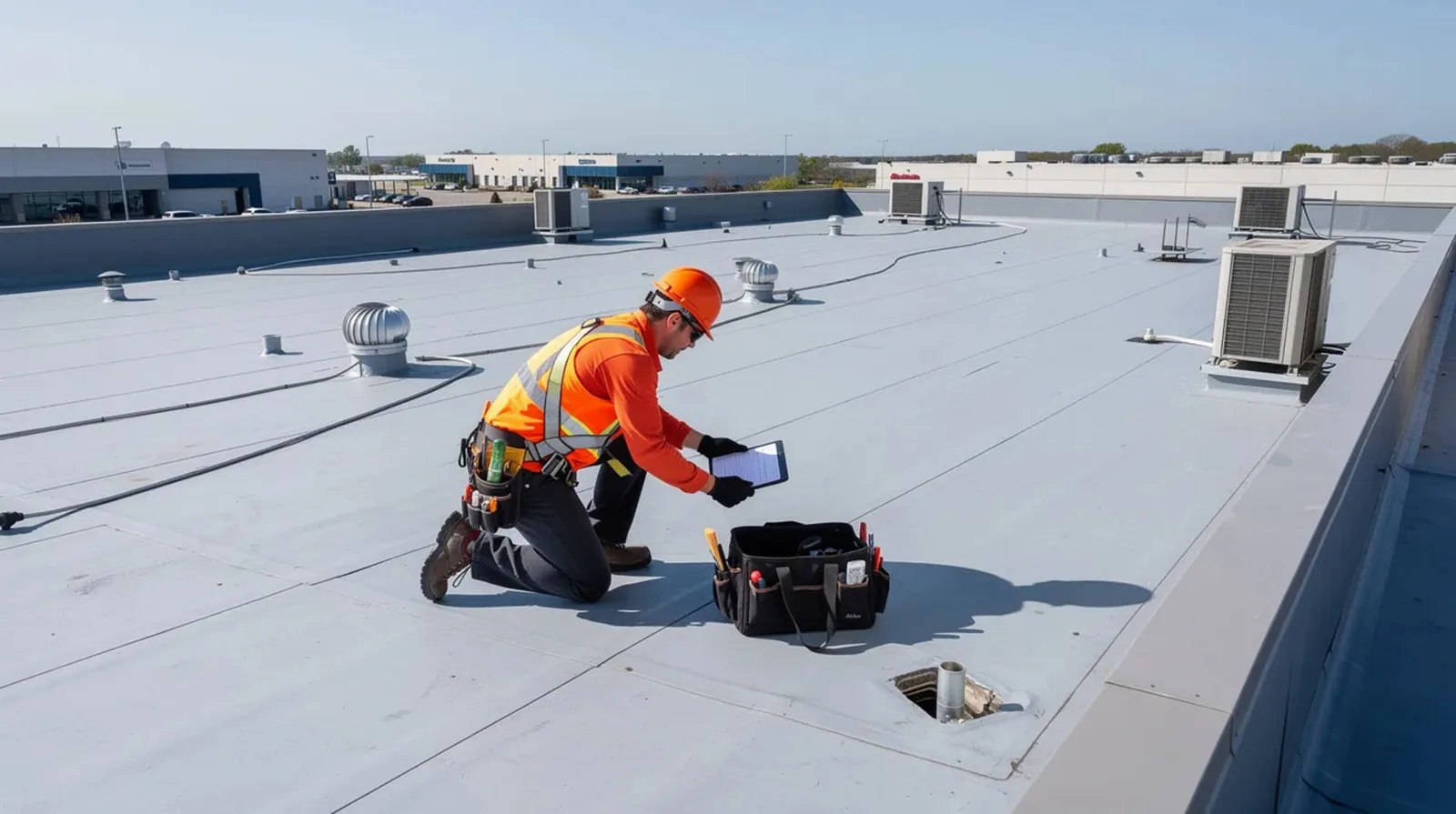
A capital plan for roofs begins with the last set of walk notes, not with a blank budget sheet. The superintendent lays the rated roof sections out in order, from worst to best, and asks of each one what it will do over the next five winters. Some will need nothing. Some will need a repair that buys three more years. A few will need a tear-off, and the plan says which and when.
For owners in Federal Way, WA, timing matters as much as scope. A replacement that lands in October meets the wet months head-on, while the same job in June meets the driest stretch of the year.
Which roofs go on the replacement list first?
The list is built from three findings. First is moisture: core cuts and an infrared moisture survey show how much insulation is wet, and a roof with large wet areas moves up. Second is repair history: a roof that needs the same seam or flashing fixed every winter is telling the owner something. Third is the deck, because rusted fasteners or soft substrate board change the scope from a surface job to a rebuild.
A roof that scores badly on one finding can still be repaired. A roof that scores badly on two usually belongs on the replacement list. The plan shows the reasons, so a board or lender can follow them without a roofing background.
What drives the budget for a replacement?
Square footage is the start but not the end. The budget moves with the tear-off depth, the amount of deck repair, the insulation thickness, the number of penetrations and drains, the height of the walls and the crane picks needed. A roof with few penetrations and clear access goes faster than one with a hundred curbs and a tight lay-down yard.
Staging adds its own line. A crane pick and a lay-down yard fit differently on a Pacific Highway South retail lot than on a Woodbridge industrial site, even when the roofs are the same size. Disposal, permits and the dry-in sequence follow. We list these drivers in the plan as ranges to be confirmed at the walk, and we do not quote a figure until the superintendent has stood on the deck.
When in the year should the work be scheduled?
The calendar decides how much roof can be opened at once. Auburn, in the same Green River corridor, peaks in November and December and bottoms out in July. Tacoma has roughly 155 wet days a year, so a plan that assumes dry weather in October is a plan that slips. Federal Way's rain comes mostly from October through March.
For the plan, that means the large tear-offs sit in the dry months and the wet months are kept for repairs, inspections and small sections. A budget that puts a big job in January will carry weather holds and a smaller open area each day. We note that in the plan so the owner sees why a dry-season slot costs less in lost days than a winter one.
What do code and energy rules add to a replacement?
The 2021 International Building Code applies in Washington with state amendments, the latest effective March 15, 2024. Chapter 51-11C WAC makes the 2021 IECC the state commercial energy code. A full replacement can trigger insulation requirements that a repair does not.
That is why the plan marks which roofs are likely to stay under repair rules and which will reach replacement. The difference shows up in the insulation line and in the permit path. Where a recover is possible, the plan sketches it as an alternative so the owner sees both costs side by side. A roof recover keeps the existing layers, but only where they are dry and the deck is sound.
How do repairs fit between replacements?
A roof near the end of its life still has to stay dry. The plan carries a run-out line for each such roof: the repairs expected until the replacement date, such as seam fixes, drain work and flashing repair. Commercial roof repair done on purpose is cheaper than an emergency visit, and the plan keeps the two apart.
Each year, the walk resets the line. If a roof holds up better than the rating suggested, the replacement moves out. If a storm or a failed detail makes it worse, the replacement moves in, and the owner learns that from a dated entry in the file, not from a leak. The plan is a living document, but each change has a reason and a date.
Run-out repairs are also where small decisions add up. A drain cleared in September, a split seam welded in November and a coping reset in March each cost little on the day. Left alone, the same items turn into wet insulation and a replacement date that arrives early.
Can one plan cover The Commons, strip retail and Fife warehouses?
It can. Federal Way retail runs from The Commons to the Pavilions Centre strip mall, while the Kent Valley, Auburn and Fife nearby hold warehouse, distribution and aerospace manufacturing space. A portfolio with both kinds sorts the roofs by condition first and building type second, because a shopping center roof and a warehouse roof fail in different ways but are ranked on the same scale.
The result is a single schedule. The finance team sees the replacement years in one column, the repair run-out in another and the walk dates beside them. The plan ties back to the roof asset file, so every line has a photograph behind it.
Owners with buildings in Fife, where the economy centers on warehousing and industrial facilities near the Port of Tacoma, I-5 and Highway 167, can set that cluster on its own page of the plan and give it its own dry-season window. The crew moves building to building in one mobilization, which keeps the staging cost from repeating.
Commercial Roofing Questions
How far ahead should a capital plan look?
Five years is the working horizon for most owners, with a ten-year view for the roofs that are young. Past five years the ratings are guesses, so the plan resets every year after the walk. The near years carry the detail and the later years carry ranges.
Should an owner replace the oldest roof first?
Not automatically. Age is a clue, but moisture, repair history and deck condition decide. An older roof with dry insulation and a sound deck may outlast a younger roof with wet cores. Put the cores and the scan results ahead of the date on the permit.
What if the budget cannot cover every roof on the list?
Stage it. Replace the roof with the worst combination of wet insulation and repeat leaks first, run the next one on a repair line and protect the rest with drain and edge work. The plan shows which sequence leaves the building with the fewest open leaks at the end of each winter.
Does the plan include prices?
It includes cost drivers and ranges, and a firm number comes after a walk with the superintendent. A plan built on unmeasured roofs would only look precise. We confirm access, tear-off depth and deck repair allowance on site before a figure goes on paper.
How does a plan help in a sale or refinance?
A buyer or lender asks for the roof's remaining life and the near-term spend. The plan answers both with photographs and cores behind them, which shortens the question period. A due diligence roof survey can be cut from the same file.
Send the roof plans and the budget calendar
Send the GC or owner's building list, roof plans and fiscal calendar so we can walk the sequence, staging and tie-ins with your superintendent before a number goes on paper.