
Roofing Capabilities
Roof Asset Management in Federal Way, WA
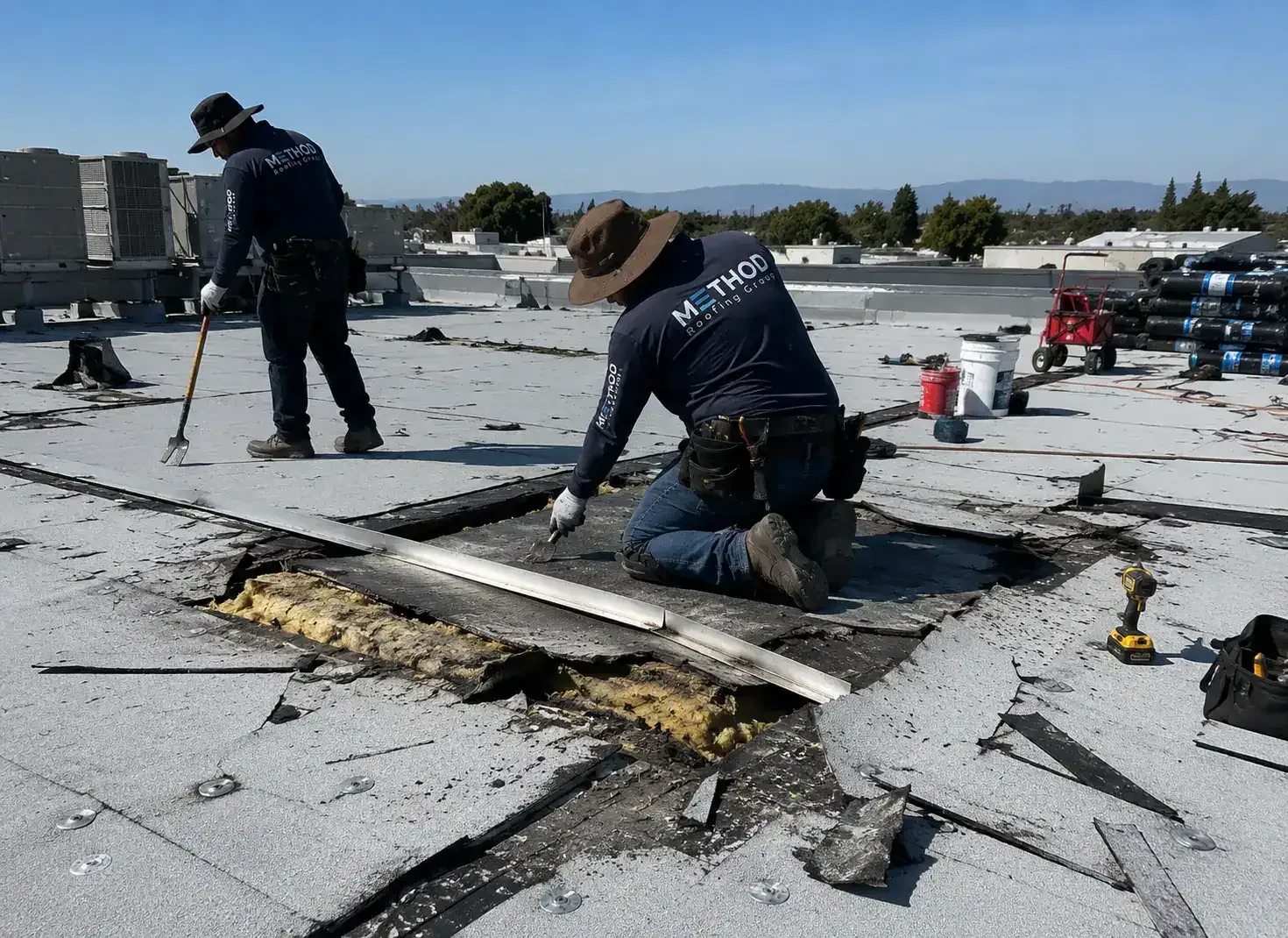
Before any record exists, the crew leader walks each roof with a tablet, a can of paint and a copy of the site plan. Every roof section gets a number, every drain gets a tag, and every photo is named for the section it shows. That walk is the first page of an asset file for Federal Way, WA owners who hold more than one roof and want to see them side by side.
The file grows from there. Core cuts confirm what the layers are, fastener pull tests show how the deck is holding, and each return walk adds a dated entry so the owner can see which roofs are drifting and which are steady.
What does the first walk record for each roof?
The first walk records the facts that do not change quickly: the system type, the number of roof sections, the drain count and the penetrations on each. We walk the deck in a fixed order, from the access point along the perimeter and then across the field, so a second crew can repeat the route a year later and compare like with like.
Wherever the layers are hidden, a core cut settles it. We note the membrane, the insulation, the substrate board and the deck, then patch the cut and photograph it. Where fastening is in question, a pull test on a few fasteners shows whether the deck still holds them. Those numbers go into the file next to the photo.
Access gets its own line. The crew leader notes the hatch or ladder used, the fall-protection tie-off points, the staging area that worked for the lift and anything that blocked the route. When a later crew arrives, those notes save the first hour and tell the owner what a crane pick or a lay-down yard will need.
How are roofs rated so the file stays comparable?
A rating is only useful when two people would give the same one. We rate each section on a short scale from sound to failing, with a written reason beside every score. A section rated serviceable with two open seams reads differently from one rated worn with broad surface cracking, and the reason line says which it is.
Photos are numbered to the roof plan, so any item can be found again. When a section changes rating between walks, the file shows both photos together. That pair is often what an owner needs to decide between a repair now and a capital budget line for next year.
A rating means little in money until it carries an action. The scale itself has no price, but each rating comes with a recommended action and a window, such as repair this season, plan for replacement within the budget cycle or monitor on the next walk. The finance side can read those windows without reading the roofing detail.
What does the file track through a wet winter?
Federal Way has a warm-summer Mediterranean climate, with no average monthly temperature above 71.6 F. Rain is the working stress, with the Auburn gauge peaking in November and December and bottoming out in July and roughly 155 wet days a year in Tacoma. A roof in this region is wet more often than it is dry.
So the file tracks what rain exposes: drains and strainers, debris along the low edge, standing water after storms and the seams that sit in it. A section that ponds in December and is dry in July is flagged with both dates. That gives the owner a reason to schedule drainage work during the dry months.
Which edge items stay on the list after a windstorm?
Enumclaw's reading of 74 mph in the November 2024 bomb cyclone was the highest anywhere in Washington. It is a reminder of how hard wind can push on a roof edge, and the file carries an edge line for every roof. Coping joints, cleats, edge metal fasteners and the first few feet of membrane are checked and photographed on each walk.
Edge items that failed a pull test or showed lifted metal are carried forward until closed out. Nothing drops off the list because a season passed. When a repair is made, the file records the date, the method and the photo, so the next walk starts from what was done instead of from guesswork.
Can one file cover roofs from the Woodbridge buildings to Kent Valley warehouses?
It can, and that is the point. At Woodbridge, Industrial Realty Group is developing the industrial park, and its first phase is two new buildings, A and B. New roofs start the file with a baseline walk. Older roofs start with the walk and the cores. Either way, each gets a number and a rating.
Owners with space in the Federal Way West Campus area, retail on Pacific Highway South, or warehouses in the Kent Valley can keep one record, with the same photo naming and rating scale on every building. Distance changes the drive, not the format of the file.
What does the owner receive at closeout and each return walk?
At the closeout walk, the superintendent goes through the file with the owner or property manager, one roof at a time. The day-one punch list is reviewed against what was found, and open items are assigned a date. The owner keeps the photo set, the rating sheet and the roof plan with section numbers marked.
Return walks follow a set rhythm, usually after the October to March rain and again before it starts. A preventive maintenance visit can run on the same schedule, so the file records the repair and the reason together. Where wet insulation is suspected, an infrared moisture survey adds a map to the entry.
The file also keeps the paperwork that tends to go missing: warranty letters, product data sheets, repair invoices and the names of the crew leaders who did the work. Kept next to the photos, those records turn a sale or a refinance from a scramble into an afternoon of copying files.
Commercial Roofing Questions
How many roofs does an owner need before an asset file makes sense?
Two is enough to benefit. With two or more roofs, the file shows which one needs money first and why. With one roof, the same record still helps at a sale, a refinance or a warranty claim, because it shows what was found and when.
Should the first walk happen in the wet season or the dry?
Do the first full walk in the dry months if the schedule allows, then repeat in the wet season. The dry walk shows surface condition and lets crews open cores comfortably. The wet walk shows where water sits and which drains struggle. Both belong in the file.
What if no roof drawings exist for the building?
The first walk produces them. We mark the section boundaries, drains and penetrations on a site plan and number each section. That marked plan becomes the working drawing for every later walk, and the owner keeps a copy.
How does an asset file connect to a written condition report?
The file is the running record, and a condition report is a snapshot cut from it for a lender, a buyer or a board. The same photos and ratings feed both, so nothing is retyped and nothing contradicts the file.
Can the file support a plan that spans several buildings?
Yes, and that is where owners usually start getting value from it. Ratings and ages sort the roofs by urgency, and the sorted list feeds a multi-site program with one schedule for the crews.
Send the roof plans and the building list
Send the GC or property manager's building list and any roof plans you have. We will walk the first roof with your superintendent, set the numbering, and agree on the rating scale before a number goes on paper.