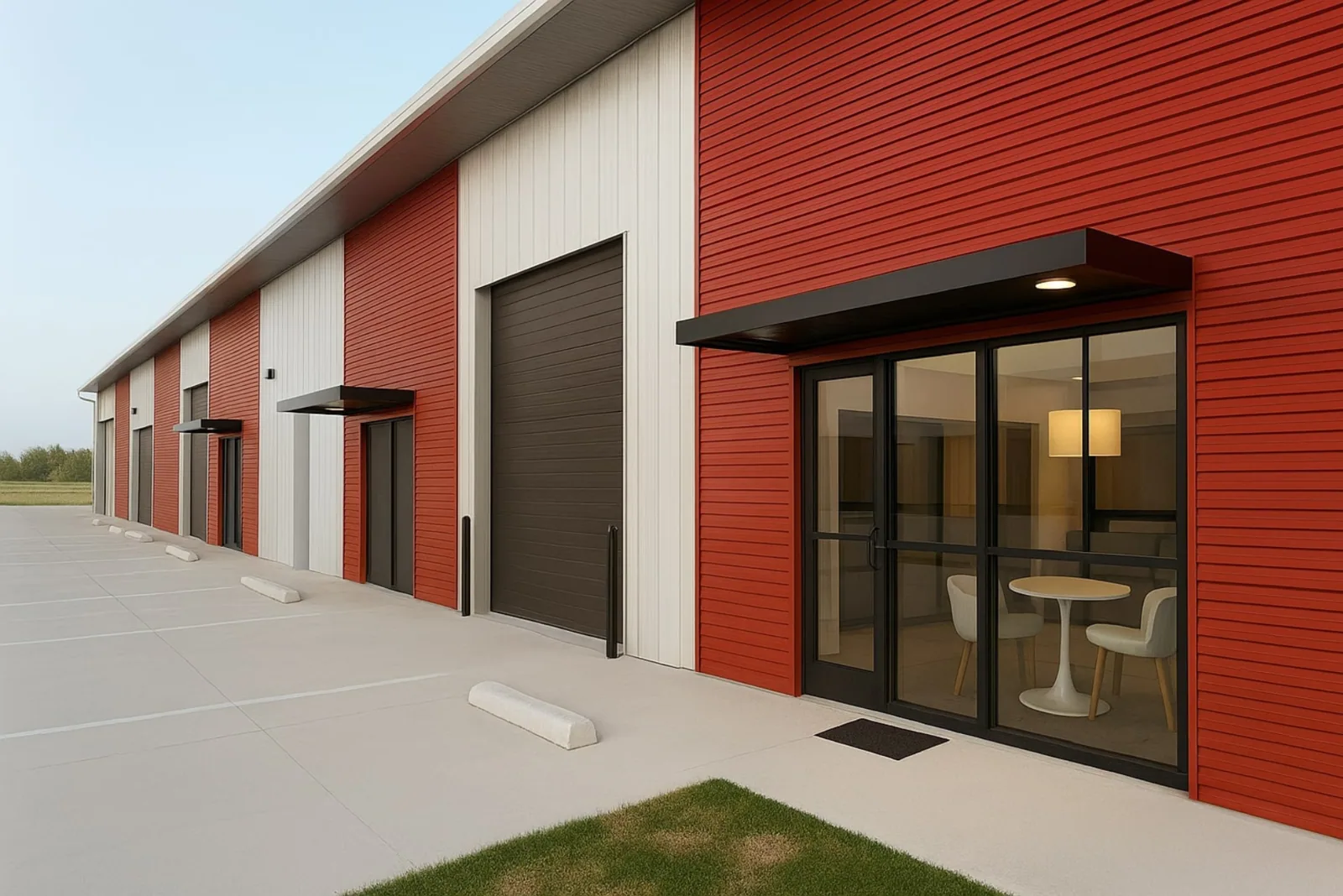
Property Types We Roof
Shopping Center Roofing in Federal Way, WA
On a shopping center job in Federal Way, WA the superintendent walks the parking lot before he walks the roof. He counts the spaces a crane will take, finds the delivery doors behind the units and asks the center manager which tenants have the most to lose from a closed entrance. The roof can wait ten minutes. The lot cannot, because every space the crane takes is a space a customer does not get, and the center manager hears about it first.
A center is a row of tenants under a shared roof system, and each tenant has a lease, hours and a landlord who answers for the whole building. We sequence the tear-off by tenant bay, set the dry-in so no storefront sits under an open section overnight and agree with the manager on the calendar months, especially the weeks before the holidays, when the lot is full and the work has to be finished or paused.
What does the first roof walk show on a strip center?
We cut cores along the roof in a grid, with extra cores at each rooftop unit, drain and parapet corner, and we pull fasteners to test the deck. A moisture scan across the roof shows wet insulation, and we lay the results over the tenant plan. The center manager sees at a glance which bays sit under wet roof and which are dry.
Then we trace the leak history. Tenant complaints, stained ceiling tiles and prior repairs are matched to the roof above them. Strip centers often have roof patches from several repairs by several contractors, and each patch is a possible leak. The first report lists those patches, notes which tenant's rooftop unit sits near each one and ranks the work by what is leaking now and what could leak in the next storm.
Where do the crane, the crew and the dumpsters go in an active lot?
Parking is the center's income, so staging gets drawn on the site plan before anything else. We choose a corner or a rear service lane for the crane pick, fence the lay-down yard and mark the haul route so trucks do not cross the main drive aisle. Dumpsters and chutes sit at the back of the building where deliveries already happen.
The Commons, the city's only indoor mall, sits on South 320th Street and Pacific Highway South near the main I-5 exit, while the Pavilions Centre strip mall took the place of Federal Shopping Way in 1995. Those two formats lead to different staging: an enclosed mall has loading docks and roof access points, while a strip center has a curb line and a service alley. Farther afield, Tacoma Mall is Tacoma's largest shopping center and Westfield Southcenter in Tukwila is described as Puget Sound's largest shopping complex, and a complex on that scale is staged from its own site drawings.
How do you keep tenants dry during the tear-off?
The crew works one tenant bay at a time. Inside a bay the order is strip, insulate, membrane and edge seal, all before the crew leaves, with the crew leader inspecting the temporary seal as every shift ends. A tenant that sells food or electronics gets scheduled for the driest forecast window.
Puget Sound rain does not arrive on a calendar, and retail cannot absorb a wet ceiling in a store. With roughly 155 wet days and about 40.8 inches a year in Tacoma, the crew leader reads the forecast every morning and keeps the open area small whenever the sky looks unsettled. If a front arrives sooner than predicted, the section is sealed, the crew moves to curb prep and parapet flashing, and the tenant hears from the manager before the next shift.
Which parts of a retail roof leak most often?
Rooftop units on tenant-installed curbs, skylights over entry vestibules, parapet walls behind signs and the scuppers at the back of the building produce most of the calls. A tenant who adds a unit or a kitchen exhaust often leaves a penetration that the original roof plan never showed. We walk the roof against the tenant list and mark every addition.
Tie-ins between tenant bays and between old and new roofing are drawn before work begins. Rot and movement are checked at the rooftop equipment curbs and supports, and sign supports that pierce the membrane get their own flashing. Edges are fastened to a nailer and pull-tested. A single-ply system such as PVC roofing may suit a roof with several kitchen exhausts because the welded seams resist grease better than some alternatives.
How do you work around shoppers and the holiday season?
Customers should see a fenced corner of the lot and not much else. Noisy steps move to the hours before the center opens, and the crew leader meets the manager before each shift to confirm which entrances stay open. Fall protection, debris netting and covered walkways keep people clear of the edge.
The holiday weeks are the hard limit. Most centers want the roof finished or paused before the weeks leading up to the busiest trading days, so we count backward from that date and set the start accordingly. A center manager who needs retail and restaurant chain tenants to stay open can ask us for a bay-by-bay calendar, and a landlord with several centers can share the same plan across Federal Way City Center and other sites.
What does the landlord get at the end?
The closeout walk goes bay by bay with the center manager. We check every curb, drain, parapet and tie-in, and the day-one punch list is written in paint on the deck. The file holds the layer photographs, core locations, product data and the warranty forms, along with a roof plan that marks each tenant bay.
That plan helps the next owner and the next tenant. A tenant that adds a unit later has to work from a drawing that shows where the roof is under warranty, and the manager can enforce it. The amended 2021 International Building Code and the state commercial energy code both touch the permit, so the file lists the insulation installed and sits beside the lease exhibits. A big-box retail roof and a grocery store roof follow similar steps with different equipment loads.
Commercial Roofing Questions
Can a shopping center stay open during a reroof?
In most cases yes. We work one tenant bay at a time, fence the staging corner of the lot and keep the main entrances open. The manager tells us which tenants are most sensitive, and we put those bays in the driest windows.
How do you handle tenants who added rooftop equipment?
We walk the roof against the tenant list, mark every addition and flash each penetration. If a unit has to be disconnected, the tenant's mechanical contractor sets the date with us.
When should a holiday blackout start?
Count back from the first big trading week and add a margin for weather. The manager and our superintendent set the date together, and anything not finished by then gets a temporary seal.
Should the landlord repair or replace?
Cores and a moisture scan answer it. A dry roof with a few failed spots is a repair job. A roof with wet insulation across several bays points toward replacement, and we show the wet areas on the tenant plan.
Who is responsible for a leak that starts at a tenant's unit?
The lease decides. We document where the water entered, what equipment was nearby and what repair was done, so the landlord and the tenant can sort it out.
Send the site plan and the tenant list
Send the site plan, the tenant list and the dates of any retail blackout. We will walk the sequence, staging and tie-ins with your superintendent before a number goes on paper.