
Roofing Manufacturers
Sika Sarnafil Roofing in Federal Way, WA
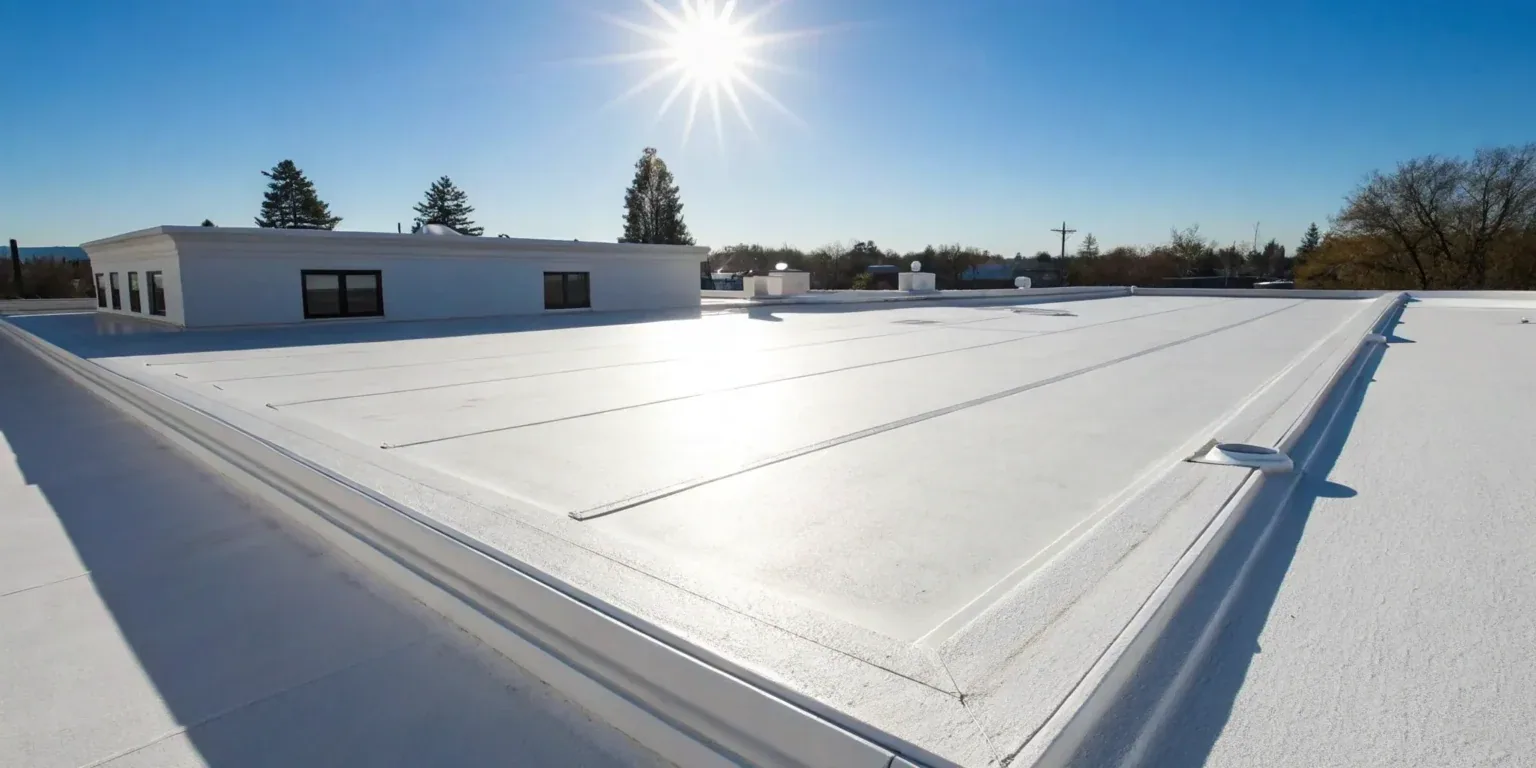
Walking the deck of a Sika Sarnafil roof, the superintendent looks for the weld line before anything else. Sika Sarnafil is a manufacturer of thermoplastic roofing membranes, the family of sheets that are joined by heat welding instead of tape or glue. A good weld shows as a continuous, slightly raised line, and a bad one shows as a dull edge, a gap or a lifted flap. On a roof in Federal Way, WA, that line decides how the repair goes.
Installation, repair and maintenance follow the published detail for the sheet found on the roof, with a core cut and a seam probe showing how it was built.
What makes a thermoplastic weld good or bad?
Heat and cleanliness make the difference. A hot-air welder softens both sheets so they fuse into one, and anything between them, from dust to oil to a film of moisture, weakens the bond. The weld also needs the right temperature and speed, which change with the weather and the age of the sheet.
We test welds by probing, running a blunt tool along the seam edge and feeling for gaps. A seam that probes open is marked in paint and re-welded after cleaning. Where the sheet has aged and will not weld cleanly, a cover strip of compatible material is welded over the repair. Every weld repair is photographed with the section number in the frame.
Probe results are written against the roof plan so a pattern along one run can be seen. A line of failures along a single joint suggests movement in the deck or a fastening problem, not a bad day of welding. That distinction decides whether the fix is another weld or a repair to what lies beneath.
How are corners, boots and penetrations detailed?
Corners are the hard part of any sheet roof. Prefabricated inside and outside corners, pipe boots and curb flashings are welded to the field sheet and to the wall membrane, giving continuous coverage where water likes to collect. Where a prefabricated piece does not fit, the crew cuts and welds one from sheet stock.
The pieces must be clean and compatible, and the substrate behind must be sound. A skylight curb rebuilt with a split corner will leak again. Our work on skylight and penetration flashing uses the same weld checks as the field seams, and each flashing gets a probe pass before the crew leaves the area.
Termination is the other half. A flashing carried up a wall must be fastened and sealed at the top, with a bar or a reglet that keeps water from running behind it. We tug the bar, check the sealant and note any wall crack that can pass water below it, because a perfect weld under a failed termination still leaks.
Which roofs suit a welded thermoplastic sheet?
Roofs with many penetrations, wide fields and chemical or oil exposure suit a thermoplastic sheet, because the welded seams hold and the surface resists many contaminants. A PVC roof is also common over buildings with kitchen or process exhaust, where grease and residue settle on the surface.
A KEE roof adds a ketone ester ingredient to resist plasticizer loss over time. We pick the system after the walk, since the deck, the drains and the building use all matter. The membrane is one decision in a stack that begins with the insulation and the cover board.
Ponding changes the choice. Thermoplastic sheets tolerate standing water better than many alternatives, but long-term ponding wears seams and collects debris. If the roof ponds after every storm, we look at drains, slope and insulation, and recommend tapered boards or an added drain before any new sheet goes down.
How does the Federal Way climate affect welding?
Welding wants dry surfaces and steady conditions. Long wet winters make both scarce between autumn and spring. No Federal Way month averages above 71.6 F, so the heat that distorts a sheet is rarely the problem.
The problem is damp. A wet lap cannot be welded, and a roof that is damp at dawn may not be dry until midday. The crew leader decides each morning whether the seam work goes ahead, and the day's open area is sized for evening dry-in. In the wet months, the work shifts to repairs and temporary seals, and finished welds wait for the next dry day.
The edge of the day matters more than the middle. Dew on a morning roof can hold up the first welds, and a late afternoon shower can undo the last ones, so the plan fills the middle of the day with the work that needs the cleanest surfaces and leaves cleanup and photography for the ends.
Where do healthcare and retail roofs fit?
Hospitals in the city include St. Francis and a Virginia Mason medical center. A hospital roof favors welded systems because they install without open flame, and odor control and dust control matter around air intakes. We plan the work with the facility lead and keep the open area small.
A retail roof of the kind found along Pacific Highway South, the city's main commercial strip, tends to run to many units and curbs, so flashing count and weld checks dominate the walk. Tacoma, Kent and the Port of Tacoma Tideflats add industrial buildings and a port that owns more than 2,400 acres for terminals, warehousing and manufacturing. In each case the sheet is the same kind of material but the sequence is set by the building.
What does the owner receive at closeout?
The owner receives the weld probe record, the photo set and the repair log, tied to section numbers. If the roof has a manufacturer warranty, its notice and repair terms go into the condition report package. A maintenance walk after the rainy season rechecks seams and flashings.
Owners comparing welded systems can also look at Duro-Last, which supplies prefabricated PVC sheets, and Versico, which supplies single-ply systems. The walk shows which fits the roof.
Heat from the welder is a safety item too. Hot-air tools run hot enough to scorch a deck and ignite loose debris, so the crew sweeps the work area, keeps a fire extinguisher at hand and checks the area for heat after the last weld of the day. That habit is part of every closeout walk, and it goes on the punch list.
Commercial Roofing Questions
Why does a welded seam fail on an older roof?
Aged sheets lose plasticizer and become stiff, and the weld line can crack at stress points. Dirt and moisture at the time of installation also leave weak spots. A probe pass finds them, and a re-weld with a cover strip usually restores the seam.
Can a thermoplastic roof be repaired during a rainy week?
Emergency repairs can use a temporary seal or a cold-applied patch, but a proper weld waits for dry conditions. We record the temporary repair, return in the next dry window and finish the weld, so the file shows both steps.
What if a flashing keeps leaking after repeated repairs?
Look at the substrate. A flashing bonded to loose or wet backing will fail again, no matter how clean the weld. We open the area, check the wall or curb, repair the backing and then rebuild the flashing from corner to top.
Does the roof need walk pads?
On any roof with regular service visits, yes. Technicians who walk the same route wear a path through the sheet. Walk pads on the route protect the membrane and show crews where to step.
How do I know whether my roof is PVC or another thermoplastic?
A core cut and the printed information on the sheet usually answer it. The seam type also gives a hint. We record the finding, because the repair materials and welding temperature depend on the exact sheet.
Send the sheet details and the roof plan
Send the GC's roof plan, the age of the membrane and any warranty letter. We will probe the seams and walk the flashings with your superintendent before a price goes on paper.