
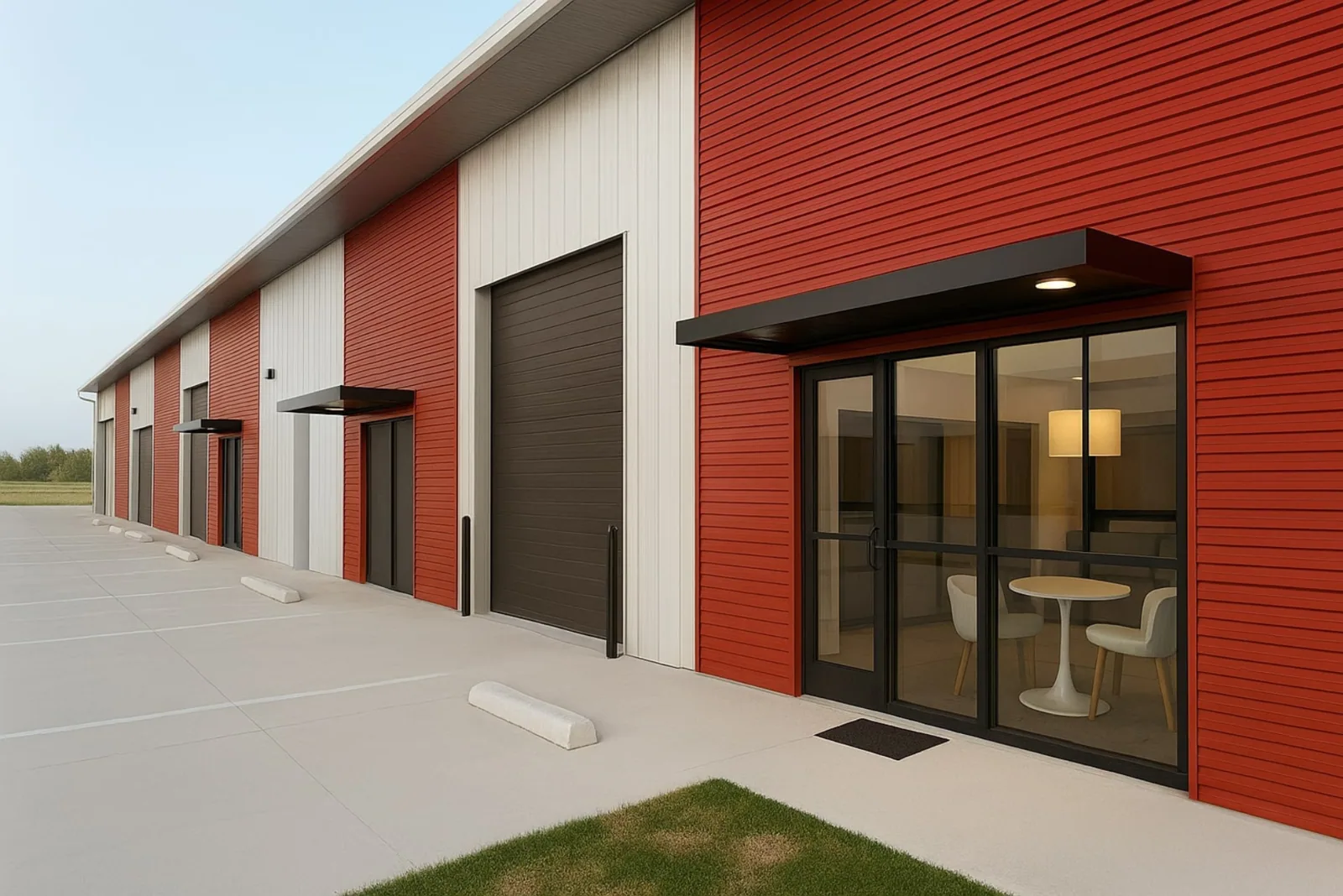
Property Types We Roof
Big-Box Retail Roofing in Federal Way, WA
Big-box work begins with the store's corporate facilities contact, because a national retailer usually has a roofing specification, an approved membrane list and a vendor onboarding process that the superintendent must learn before the first core is cut. Once that paperwork is in hand, he walks the roof with the store manager and the regional facilities lead in Federal Way, WA and agrees on the first night of work.
A big-box store sells every hour it is open, and the roof is the part of the building that cannot be allowed to interrupt it. We plan the tear-off limits by merchandise zone, schedule the loud steps for the closed hours and set the dry-in so no aisle sits under an open section when the doors open in the morning.
What does the first walk of a store roof include?
The first walk is a survey of the roof the way the store's engineers see it: units, hatches, drains, skylights and penetrations. We cut cores at the corners, near the rooftop units and in the field, pull fasteners to test the deck and mark wet insulation. A moisture scan across the roof shows which zones are wet, and we lay the result over the store's floor plan.
Federal Way's large retail and service employers include Walmart Supercenter, Costco, Fred Meyer and The Home Depot, with Walmart at 376 employees and Costco at 352. Each store has its own deck, its own units and its own age, so the walk measures the roof itself.
The scan also finds the quiet problems. Ponding beside a unit, a drain set high and a seam that has lifted at a wall are all visible from the roof surface long before they stain a ceiling tile. We photograph each one with a marker for scale and rank it by what is under it: open product aisles and registers rank above a stockroom. The store gets the ranked list before any price is discussed.
Where does the crane go when the lot is the store's front door?
Large retail lots are shared by customers, delivery trucks and the fire department. We ask the store manager and the landlord for the site plan, mark the fire lanes and the receiving dock, then place the crane in a corner that does not block the main drive aisle. The lay-down yard is fenced, and material shows up in the order the crew needs it, during hours the store picks.
Stores on Pacific Highway South, the main commercial strip, are reached from the I-5 exits at 348th, 320th and 272nd Streets, so each store is asked which approach its trucks take. A store in Federal Way City Center and one farther out will not share a layout. We draw a haul route that keeps roofing trucks off the customer drive aisle and out of the receiving dock during delivery hours.
How is the roof kept watertight while the store trades?
Night work sets the pace. After closing, the crew strips a section, insulates it, lays the membrane and seals the edge, and the section is watertight by the time the first stocker arrives. The crew leader walks the temporary seal at the edge each morning, and the store manager signs off that the zone is closed.
Summers in Federal Way stay mild, with no monthly average above 71.6 degrees, so night work rarely fights heat; the pressure comes from the wet months instead. When a front moves in during the shift, the crew seals the open section and switches to flashing and curb prep, and the manager hears about it before the store opens. For a roof with an existing dry layer, a recover reduces the number of open nights.
Which details drive the leaks on a store roof?
Rooftop units cause most of them. Refrigeration condensers, makeup air and heating units sit on curbs that move, and each curb is a flashing detail. Rooftop equipment curbs and supports are checked for rot and rust, and the tie-in between new and old membrane is drawn before the work starts. Roof hatches, skylights and sprinkler risers each get a detail of their own.
Edges get a pull test. In November 2024 a bomb cyclone put 74 mph winds on Enumclaw, the strongest recorded in Washington, so perimeter metal is fastened to a nailer and pull-tested at the corners and along the front elevation. A TPO roofing system is common on big-box roofs because the sheets come wide and the seams are welded, which reduces the number of field joints.
How do you coordinate with store operations and corporate rules?
Retailers set strict rules for contractors: insurance certificates, badge requirements, hot-work permits and a quiet period around the busiest trading weeks. We ask for the vendor packet early and return it with the crew list, the insurance certificates and the hot-work procedure the crew will follow. The store manager is our contact for the day, and the regional facilities lead approves any change to the scope.
Fall protection, barricades and covered walkways keep customers and the crew apart. Inside, we ask for protection over any aisle with open product and over registers. Chains that run many stores can use one file format across locations, and a retail brand with stores in several cities can see all of its roofs on the same schedule. A shopping center roof adds tenants to the picture.
Cost on a store roof follows the schedule more than the area. Night labor, small closing-hour work windows, vendor paperwork, the number of rooftop units and the insulation depth the energy code calls for each move the price. The scope lists them separately, so the facilities lead can compare a repair that stops the leaks now with a recover or a replacement planned for the next fiscal year.
What does the facilities lead receive at closeout?
The regional facilities lead and the store manager join our crew leader on the finished roof, and each tie-in is checked before the day-one punch list goes down in paint. The retailer's file gets layer photographs, core and pull-test locations, product data and the warranty forms its specification requires, plus a roof plan labeling every unit and penetration.
Washington's amended 2021 International Building Code and the commercial energy code built on the 2021 IECC set the permit requirements, and the closeout file lists the insulation and fire classification installed. A grocery store roof carries more refrigeration equipment, and the same sequence applies with more attention to the condensers.
Commercial Roofing Questions
Can a big-box store stay open during a roof replacement?
Yes, in most cases. The loud work moves to night hours, the roof is sealed section by section before opening and the store manager signs off each morning. Interior protection goes over registers and open product when the manager asks.
Do you follow the retailer's roofing specification?
We build to the specification the retailer gives us and ask for it before pricing. If the specification and the existing roof conflict, we raise the question with the facilities lead before work begins.
How do you protect rooftop units during the work?
The mechanical contractor sets the dates for any disconnect, and we flash each curb the same visit. Units stay in service unless the store decides otherwise.
What about a recover on a store roof?
A recover works when cores show dry insulation and a sound deck, and it cuts the number of open nights. Wet insulation or a rusted deck means tear-off.
How soon can a leak over the sales floor be sealed?
A leak over the sales floor gets a temporary seal the day it is found.
Send the store roof plan and the vendor packet
Send the roof plan, the retailer's roofing specification and the store's closing hours. We will walk the sequence, staging and tie-ins with your superintendent before a number goes on paper.