
Property Types We Roof
Grocery Store Roofing in Federal Way, WA
A grocery roof job in Federal Way, WA starts at the back of the store, where the refrigeration plant lives. The superintendent finds the condenser deck, the compressor room and the lines that cross the roof, then asks the store director which cases would spoil product if a power or coolant issue interrupted them. Those answers shape the whole plan.
Food stores cannot close for a roof. They can protect product, move traffic away from an aisle and work the roof between the last restock and the first shopper. We plan the tear-off limits by department, put the heavy steps in the overnight hours and set a dry-in standard that keeps water out of every case and every produce table below.
What does the walk of a grocery roof turn up?
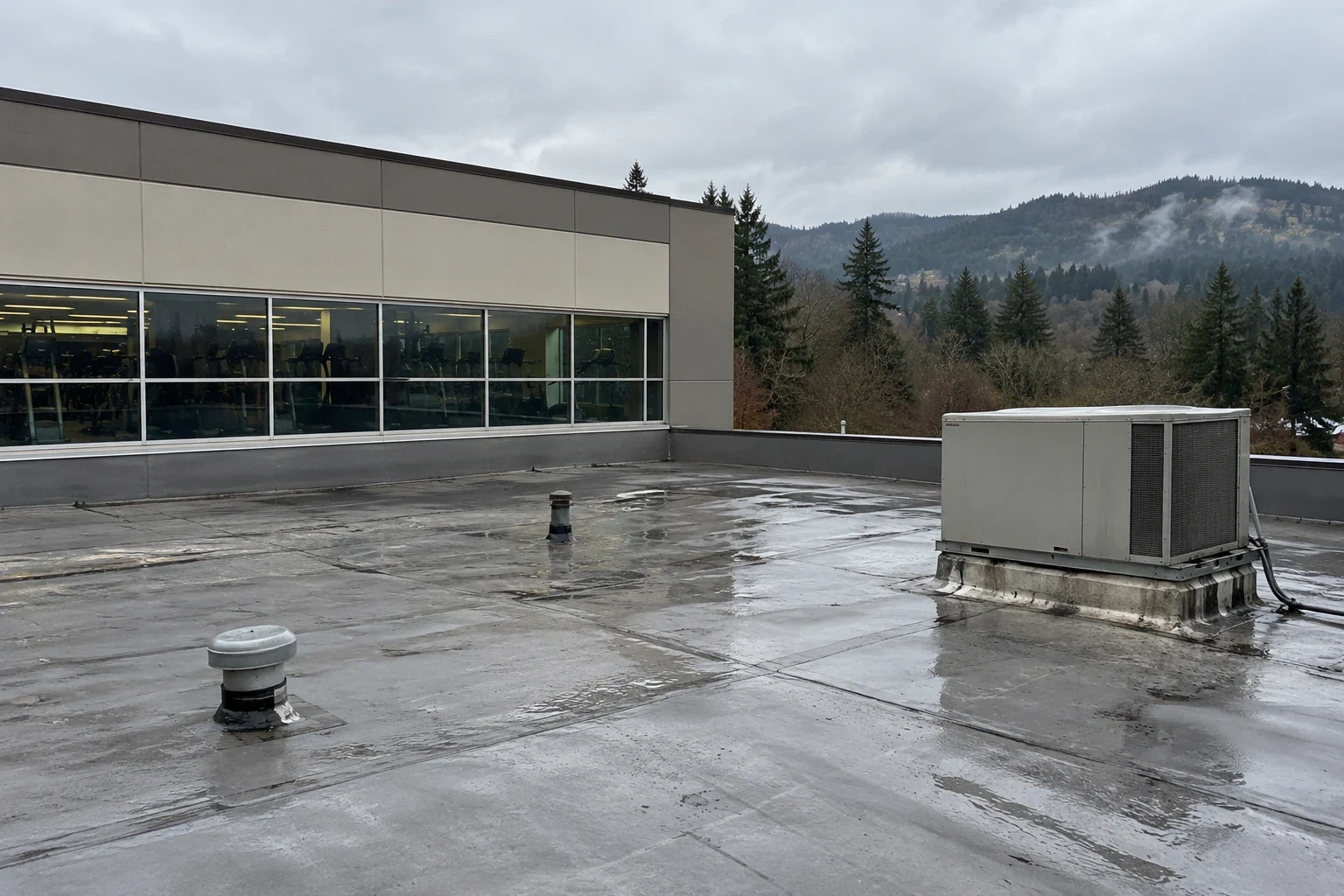
A grocery roof carries a dense field of equipment. We find the condensers, the exhaust fans from the bakery and deli, the makeup air units and the pipe runs, then check each curb and support for movement and corrosion. Cores show the layers and the insulation, fastener pull tests show how well the deck is held, and a moisture scan marks wet areas against the store plan.
Grease and condensate leave their own signs. A stain near a deli exhaust can soften the membrane, and a drip line from a condenser can leave a path of wear. We photograph those marks and note the equipment that causes them. The store director gets a plan that pairs each stain with the department below it, so the repair order follows the product and not just the leak.
We also look at the roof edge above the entry. Vestibules and canopies at a grocery entrance take foot traffic from carts and pickup orders, and a leak there lands on a shopper, not on a case. The report ranks the entry and the receiving dock canopy with the refrigeration areas, because water in those spots lands on people and product the same hour it enters.
How do deliveries and the crane share a lot with shoppers?
Grocery lots work all day. Delivery trucks use the dock at the back, shoppers fill the front, and carts and pickup orders move along the curb. We ask the director for the receiving schedule, then place the crane away from the dock and the pickup zone. The lay-down yard sits at a corner, fenced, with a defined path for material.
Safeway runs a distribution center in Auburn that employs about 800 people, and a store on a tight receiving window needs the crew out of the dock during every delivery. Roof access goes through a hatch or a crane pick, and nothing is carried through the sales floor. Roofing trucks stay out of the receiving lane and wait off-site until the crew leader calls them in.
How do you keep product dry and the roof closed overnight?
The crew works after the store has been restocked and before the first shopper. Each night's section is stripped, insulated, covered and sealed before sunrise, and the crew leader tests the edge seal before leaving. Product under the work zone is covered or moved if the director asks, and ceiling tiles are checked before the shift starts.
Auburn's annual precipitation is 37.1 inches, with 6.1 in November and 5.8 in December, which makes the cold months the real test of any seal. The same discipline applies in a dry July. A temporary seal goes on whenever weather shifts, and the store director is told before the next shift if a section stayed closed. A recover over a dry, sound roof keeps the existing layer overhead and lets the store run without a tear-off, which is the quietest way to work above food.
Cost on a grocery roof follows the constraints. Overnight labor, the number of refrigeration penetrations, food-safe protection, small work zones and the energy code insulation values each add to the price. The scope lists them separately and splits the repairs that stop leaks now from the capital replacement, so the store director and the owner can plan the work against the store's calendar and the remodel cycle.
What are the weak points on a store with heavy refrigeration?
The condenser curbs, the refrigerant and glycol line penetrations and the exhaust curbs over the kitchen and bakery take most of the leaks. Rooftop equipment curbs and supports get rebuilt or reflashed one at a time, with the refrigeration contractor setting the dates so the line and the curb finish together. Pipe boots that crack from sun and movement are replaced.
Drains matter because condensers shed water. A drain that backs up beside a condenser deck can turn a small seam gap into a wet ceiling over produce. We clean and test drains and scuppers, and we set walk pads along the technician route to the units. Membrane choice follows the grease exposure: KEE roofing and PVC are common choices where fats and oils reach the roof, since both resist them better than some alternatives.
How do you protect food safety while the roof is open?
Food safety rules come from the store and the health authority, and we follow the store's plan. Dust and debris are contained with netting and daily sweeps, openings in the deck are never left over product, and no material is stored above open food. If an interior opening is needed, the director approves the date and the protection.
Fall protection and barricades keep the crew away from the front curb. A crew leader meets the store manager at the start of each shift, reviews the zone and confirms the department schedule. This is occupied-building reroofing with food rules added. The same steps carry over to a cold storage roof, where the insulation must stay dry, and to a restaurant kitchen with a similar exhaust profile.
What does the store receive when the roof is done?
The store director and our crew leader go over the finished roof tie-in by tie-in, starting at the condenser deck. We paint the punch list for day one on the deck as the walk proceeds. The store's records get layer photographs, core and pull-test locations, product data and warranty forms, plus a roof plan labeling each refrigeration line and curb.
The permit falls under Washington's amended 2021 International Building Code and the state commercial energy code, so the file lists the insulation and fire classification installed. A big-box retail roof and a restaurant roof follow related steps. For stores in Auburn and the Kent Valley that belong to one chain, the same file format covers every site.
Commercial Roofing Questions
Can a grocery store stay open during a roof replacement?
Yes, with night work and product protection. The crew works between restock and opening, seals each section before sunrise and keeps the dock and pickup zone clear. The director tells us which departments are most sensitive.
How do you protect refrigeration while working on the roof?
The refrigeration contractor sets the dates for any line work, and we flash each curb on the same visit. Condensers stay in service unless the store decides otherwise.
What membrane suits a roof with deli or bakery exhaust?
Fats and oils attack some membranes, so we check the existing sheet and propose a grease-resistant system near the exhaust. KEE and PVC are common choices, and the final selection follows the manufacturer's specification.
Do ceiling leaks over produce need an emergency visit?
A temporary seal the same day is wise. We stop water entry first, protect the product and schedule the permanent repair for the next night window.
Is a recover a good idea on a grocery roof?
Often, when cores show dry insulation and a sound deck. It keeps the existing roof overhead and reduces noise and exposure, but wet insulation or a rusted deck means tear-off.
Send the store roof plan and refrigeration layout
Send the roof plan, the refrigeration layout and the delivery schedule. We will walk the sequence, staging and tie-ins with your superintendent before a number goes on paper.