Roof Systems
Silicone Roof Coatings in Federal Way, WA
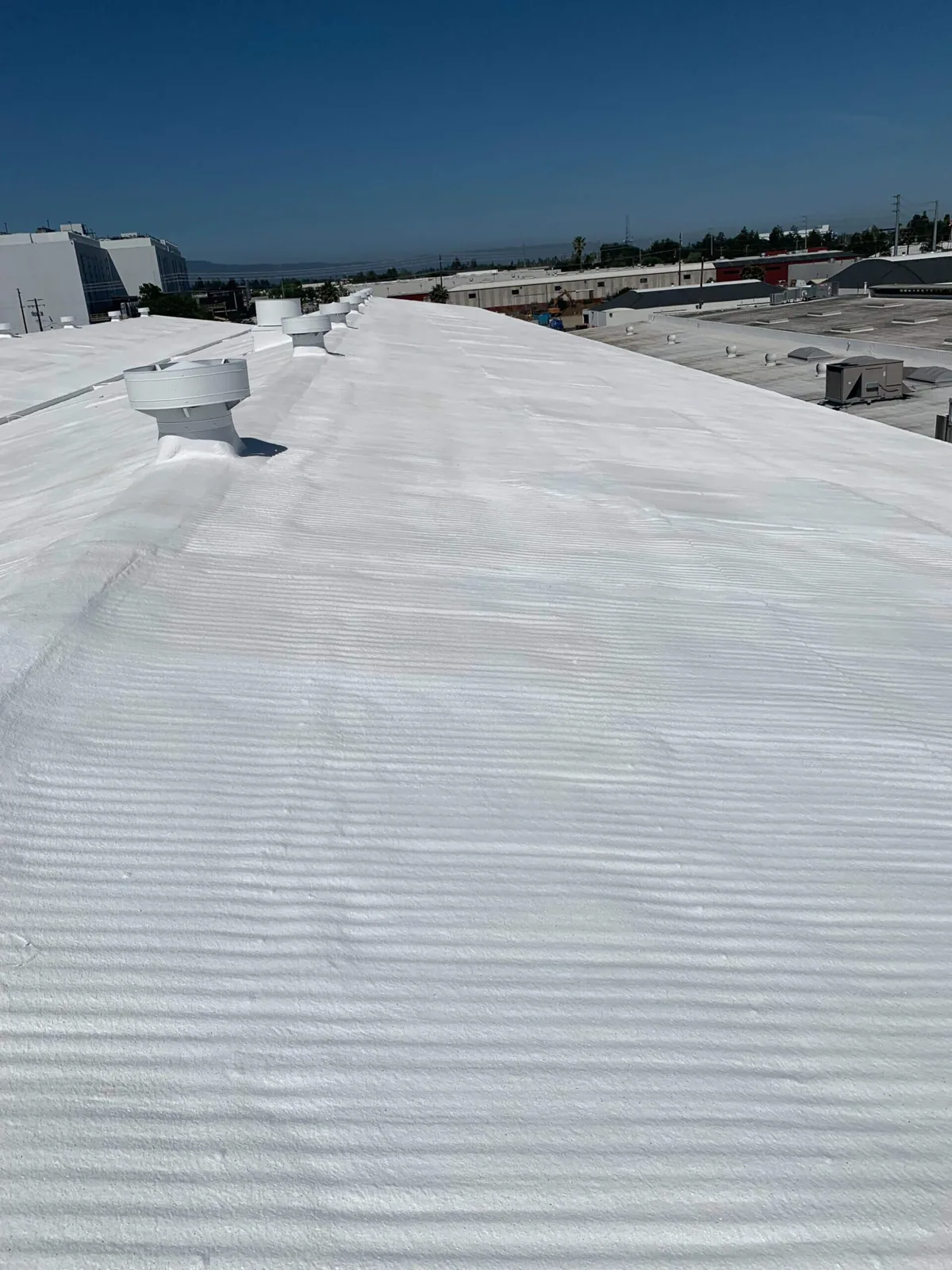
On a silicone coating job, the superintendent walks the roof looking for standing water. Silicone is a liquid-applied coating that cures into a flexible, waterproof skin, and it is the coating most owners pick when ponds sit on a flat roof for days after rain. Federal Way, WA has long wet winters, and many low-slope roofs hold water in low spots. That one condition steers the choice of coating and the cost of preparing for it.
The steps run in order. Whether the roof under the coating is dry enough to keep is a question for cores and a moisture scan. The surface gets washed, repaired and primed. The coating then goes on in coats, each cured before the next, while the crew watches the sky.
Why does silicone suit roofs that hold water?
Many coatings soften or break down when water sits on them. Silicone cures into a film that stays intact under standing water, which is why it is the common choice for ponding roofs. It also stays flexible across temperature swings and resists sun. Silicone is also the topcoat on a spray foam roof, and it seals a worn metal roof retrofit once the fasteners are replaced. The ponds do not go away, though. Standing water adds weight, collects dirt and ages seams faster, so a coating is a defense, not a cure.
We measure the ponds after a dry spell and map their depth and extent. If the cause is a blocked drain, we clear it. If the roof has a low area, we may add a drain or tapered insulation before coating. A coating over a pond that could have been drained is money spent on a symptom. A ponding water repair is the first line of the scope, and the coating follows.
What preparation does silicone demand?
Preparation decides the result. Silicone will not stick to a dirty, damp or oily surface, and it cannot be overcoated with most other products once cured. The crew pressure-washes the roof, lets it dry, removes loose material and treats rust or mildew. Silicone does not take an acrylic coating over it later, so the choice is made once, with the long view in mind. Failed seams are repaired, open flashings are rebuilt and holes are patched before any coating goes on.
A test patch checks adhesion. We apply a small area, let it cure and pull it. If it lifts, the surface needs more cleaning or a primer. Some substrates, such as certain membranes and old coatings, need a specific primer for the silicone to grip. Seams, fasteners and penetrations are reinforced with a fabric embedded in the coating, since those are the spots where coatings fail first. The crew leader photographs each stage, so the record shows what lay under the coating. Photographs of the rust treatment and the reinforced seams matter most, because they are the layers nobody can see again once the coat is on.
Thickness is the measure of quality. Silicone is applied in wet-film thickness that the manufacturer specifies, and the crew checks it with a gauge as the roller moves. Too thin and the coating wears early; too thick and it cures slowly and collects dirt. We mark gauge readings on the plan at a set spacing, and we leave the record with the owner. A roof whose coating thickness is known can be recoated with confidence, and a roof whose thickness is a guess cannot.
When can silicone be applied in a wet region?
Auburn's 37.1 inches a year fall mostly outside July, its driest month, and Tacoma's 40.8 inches arrive over roughly 155 wet days. Silicone needs a dry surface and a dry forecast long enough to cure. Dew, fog and a falling temperature can spoil an application, so the crew checks the dew point and the surface temperature before starting.
The best window is summer. In other months, we watch for multi-day dry spells and size each day's work to what can cure before evening. Summers that never average above 71.6°F are moderate for coatings once the surface is dry. If rain threatens, the crew covers wet-sensitive areas, stops and returns when the surface is dry. A coating applied in the wrong weather costs more than the delay.
Wind matters too. Overspray from a sprayer lands on cars, windows and neighboring roofs, and cured silicone is nearly impossible to remove. Most roof coating is rolled or brushed for that reason, with a sprayer used only on large, open roofs with the wind checked and screens set up. The plan names the application method, and the crew leader decides on the day.
How does the coating age?
Silicone attracts dirt, and in a wet region it can also collect algae and moss in shaded areas. Dirt lowers reflectance, and a heavy film can trap moisture against the surface. A yearly wash with a mild cleaner keeps the surface clean. We inspect seams, flashings and the coating for cracks or peeling, and we touch up small areas with the same product.
Eventually the coating wears and the roof needs a recoat. Silicone can usually be recoated with more silicone after cleaning, which is one reason it is chosen for restoration. A roof coating restoration plan lists the expected recoat interval, the inspection schedule and the cost of each. Coatings do not replace a failed roof; if cores show wet insulation across a wide area, the plan moves to a replacement.
Where does silicone fit locally?
Silicone is a fit for sound low-slope roofs with ponding: metal, single-ply, modified bitumen and built-up. Warehouses in the Kent Valley, Auburn and Fife may have such roofs, as may retail buildings along Pacific Highway South. The cores and the scan tell us whether any given roof qualifies.
State rules here mean the 2021 building code as amended and the 2021 commercial energy code. A coating does not usually trigger energy upgrades, but a replacement can. An owner in Federal Way City Center or Kent starts by sending the roof plan and the schedule, and nothing is priced until staging and tie-ins have been walked with that owner's superintendent.
Commercial Roofing Questions
Can silicone go over any roof?
No. The roof must be sound, dry and clean, and the existing surface must accept the coating. Wet insulation or failed seams rule it out until fixed. Cores and a moisture scan show which case applies.
Will silicone make my roof slippery?
It can be slick when wet. We can add granules or walk pads at access points and along service paths, and crews follow fall protection rules. Roof access hatches and ladders get a warning sign and a traction strip, so maintenance staff are not surprised on the first wet morning.
How many coats are needed?
Usually two, applied to a specified thickness, with reinforcement at seams and details. We measure thickness with a gauge while applying and record the readings.
Can I recoat silicone with acrylic?
Generally not. Most coatings will not bond to cured silicone. Silicone is usually recoated with silicone after cleaning. We confirm compatibility with the manufacturer's guidance.
How long does a silicone coating last?
Thickness, exposure and upkeep set the life. A clean, inspected coating on a sound roof lasts many years, and a recoat resets the clock. We log the schedule, the thickness readings and the date of each wash, so the next inspector knows the history.
Send the roof plan and photographs of the ponds
Send the roof plan, the age of the existing system and photographs of standing water, along with the project schedule, so we can walk the sequence, staging and tie-ins with your superintendent before a number goes on paper.