
Commercial Roofing Services
Roof Coating Restoration in Federal Way, WA
Marking the restoration limits comes before any coating is mixed. The superintendent walks the deck, circles every wet spot found by the moisture scan, and cuts cores to see what sits under the surface. A coating is only as good as the roof beneath it, and the walk decides whether the roof can take one.
In Federal Way, WA, a restoration coating is a way to extend the service life of a roof that is still sound: dry insulation, a deck in good shape, and a membrane that is worn but not failed. The coating goes over the existing surface, seals the seams and flashings, and returns the roof to a continuous, reflective skin without a tear-off. It is the work to consider before the roof reaches the point where only replacement will do.
Which roofs are good candidates?
A candidate roof is dry. Infrared and capacitance moisture scans map where water has entered the insulation, and core cuts confirm what the scan suggests. If wet insulation covers a small area, that area is cut out and replaced before coating. If wet insulation covers most of the roof, a coating will only seal the moisture in, and a replacement is the better spend.
The membrane matters as well. Aged TPO, PVC, EPDM, modified bitumen and built-up roofs can all be restored, as can many metal roofs, but each needs its own cleaning and primer. The deck must also be sound, with no soft spots or sagging that a coating cannot fix.
Roofs that carry many penetrations, curbs and patches often benefit most. A coating flows around those details and builds a single sealed surface where a sheet membrane would need dozens of cut pieces.
Which coating system should go on?
Two families cover most commercial restoration. Silicone coatings tolerate standing water, shed dirt well and hold up under long periods of wet weather, which suits the October to March rains in this part of Washington. Acrylic coatings are water-based, reflect sunlight strongly and cost less per square foot, but they need good drainage because they are not meant to sit under ponded water for long.
Chemistry also matters at the interface. Silicone does not bond well to some existing coatings, and a silicone over an acrylic base may need a tie coat. We test adhesion on a small area before choosing, so the system is picked from the roof, not from a catalog.
Reinforcement is part of the specification. Seams, penetrations and cracks receive fabric and mastic before the field coat goes on, and the field coat is applied in two passes at the thickness the manufacturer calls for. Mil thickness is measured with a gauge, not estimated.
What is the sequence on the roof?
Day one is cleaning. The roof is pressure washed, and loose granules, chalking and biological growth are removed. Washing removes the film that would otherwise stop the coating from bonding, and it also exposes defects that dirt had hidden.
Repairs follow. Open seams are welded or patched, cracked flashings are reinforced, failed sealants are replaced, and fasteners that have backed out are reset. Drains and scuppers are cleared and any low spots are mapped so the owner knows where water may remain after the coating cures.
Then comes priming where the system requires it, followed by the base coat, the reinforcement at details and the topcoat. A coating needs a dry surface and a dry forecast, which makes July the best month for this work. In the shoulder seasons we size each day's area to what can cure before rain, and we hold the work when the forecast says it will not. The closeout walk goes over every tie-in with the owner or property manager.
Where does restoration make the most sense in this market?
Large low-slope roofs on industrial and distribution buildings are natural fits. The Kent Valley, Auburn and Fife carry warehouse and distribution buildings, and a roof that has aged but stayed dry can be restored for far less disruption than a tear-off. A restoration also keeps the building operating, since no insulation is removed and no deck is exposed.
Retail along Pacific Highway South and around The Commons can include roofs that have collected patches and added equipment. A coating consolidates those repairs into one surface. Tenants keep trading, the lay-down yard stays small, and the owner gets a warrantable system. The same logic applies to shopping center roofs and to industrial work in Auburn.
The wet climate adds a consideration of its own. Auburn averages about 37 inches of precipitation a year, so a coating that sheds moisture and resists algae matters. Roofs shaded by evergreens benefit from a cleaning schedule paired with the coating.
What does restoration cost compared with replacement?
Restoration costs less than tear-off and replacement because it skips the removal, the disposal and the new insulation. The savings are largest on big, simple roofs and smallest on roofs with heavy repair needs. A roof that needs a lot of insulation replacement before coating is on the line between the two options, and that is where the core cuts earn their keep.
Cost drivers are the roof area, the amount of surface preparation, the number of details to reinforce, the coating chemistry and thickness, and the access. Warranty options vary by manufacturer and by the condition of the roof at the start. A coating also pairs well with a maintenance program, since a coated roof needs periodic cleaning and spot repair to deliver its full life.
Owners planning several roofs often sequence restoration for the sound ones and replacement for the failed ones, which is a topic for roof capital planning.
Commercial Roofing Questions
How long does a restoration coating last on a Federal Way roof?
The coating type, the applied thickness and how well the roof drains set the service life. Manufacturers publish their own expected ranges and warranty options for each system, and we match the specification to the term the owner needs. A coating that is cleaned and recoated on schedule can be renewed in place, which is why maintenance between recoats matters.
Can a roof with ponding water be coated?
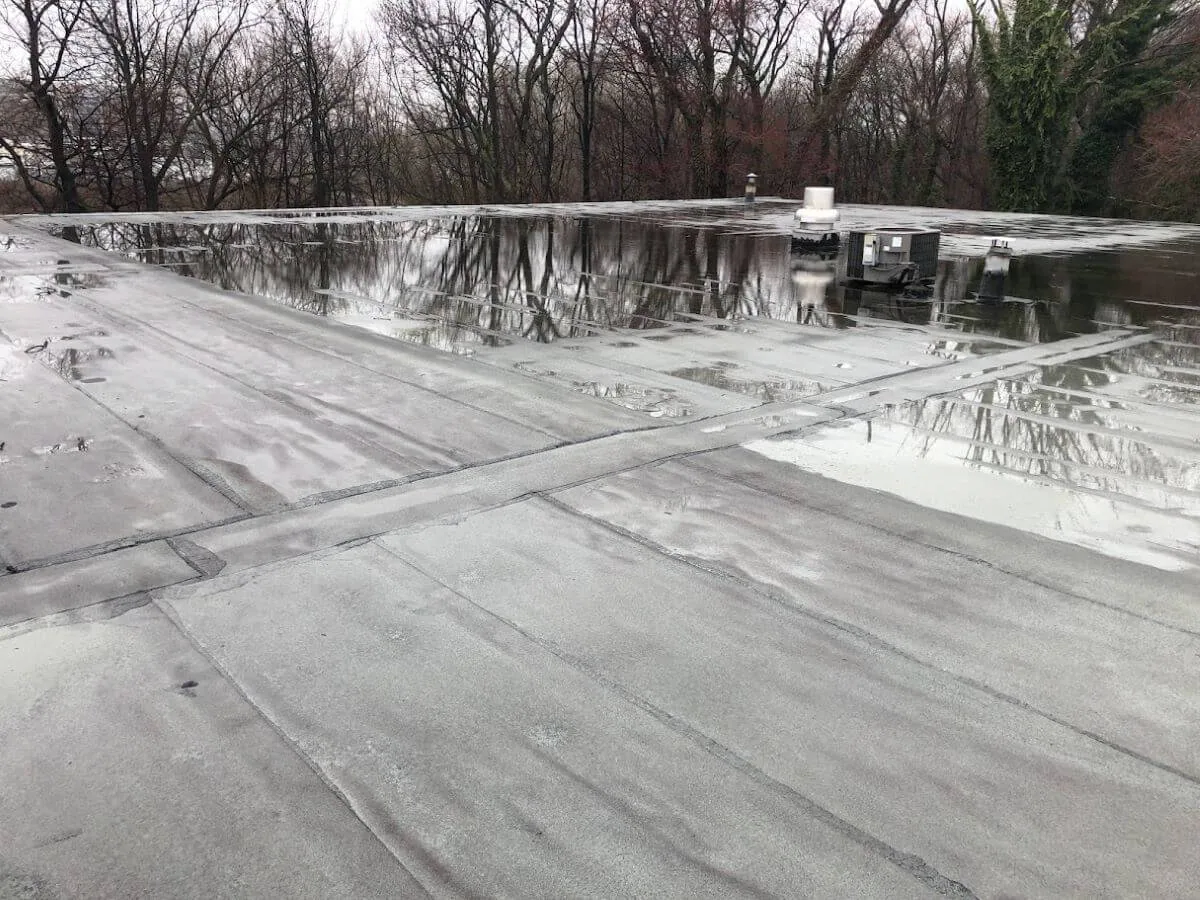
Silicone tolerates standing water far better than acrylic, so ponding does not rule out a coating. But ponding also signals that the deck may be deflecting or that drains are mislocated. We map the low spots, check the deck and the drains, and tell the owner whether correcting the slope with tapered insulation would be worth doing first.
Does the building stay open during restoration?
Yes. A coating job involves no tear-off, so there is no open deck and no debris falling inside. Odor from some coatings is managed by shutting off or shielding air intakes during application. We set the schedule with the facility manager and give tenants notice before the pressure washing day.
What if the moisture scan finds wet insulation?
We mark the wet areas, cut them out and replace the insulation with a dry board before coating. If the wet area is small, the roof remains a good candidate. If it covers most of the roof, we say so and price a recover or replacement instead, because coating over trapped moisture shortens the life of the whole system.
How do edges and rooftop units get treated before the field coat?
Each curb, unit base and parapet turn gets cleaned, primed where needed and reinforced with fabric and mastic before the field coat arrives. Edge metal is fastened or replaced first, since a coating cannot hold a loose edge down. The crew leader checks each detail on the closeout walk and photographs it for the file.
Send the roof plan and the last report
Send the roof plan, the age of the membrane and any scan or core results you hold. We will walk the deck, cut the cores and tell you whether a coating makes sense before a number goes on paper.
