
Roofing Manufacturers
GAF Commercial Roofing in Federal Way, WA
Marking the tear-off limits is the first thing the superintendent does on a roof that carries a GAF assembly, and the marks follow what is under the surface. GAF is a roofing manufacturer whose commercial offering spans single-ply membranes and asphalt-based layered systems, with the insulation and accessories that go with them. A roof in Federal Way, WA might carry a white single-ply, a modified bitumen cap sheet or a multi-ply built-up system, and each one calls for different tools and a different order of work.
We install, repair and maintain these assemblies. The walk comes first, because the repair method depends on what the layers actually are.
How do you tell which GAF assembly a roof has?
The surface gives a first guess. A smooth white sheet suggests a single-ply membrane. A granule-surfaced cap sheet suggests modified bitumen. A gravel or smooth-coated surface over several plies suggests a built-up roof. A core cut gives the real answer, because the layers beneath the surface can differ from the one on top after repairs and overlays.
We log the cut location, the layer thicknesses and the moisture reading on the plan, patch it with a temporary seal and photograph it. That record travels with the file. The warranty paperwork and the printed information on the sheet or cap help confirm the product family, but the cut tells us how the roof is built today.
Overlays complicate the picture. A building that has been re-covered once may have a single-ply sheet over a built-up base, or two layers of cap sheet. We note each layer, because building code limits how many layers a roof can carry and because the lowest layer sets the moisture story.
What changes when the roof is asphalt-based?
Asphalt-based systems are built in plies, so a single failure is less likely to open the whole roof. They also bring heat and odor to the job. Torch-applied rolls need open flame on the roof, and cold-applied or self-adhered rolls trade the flame for adhesive and a cleaner surface. The choice depends on the building, the neighbors and the fire rules.
On occupied buildings, we favor cold methods or heat-welded alternatives near air intakes, and we keep fire watch and extinguishers on the roof when any heat is used. A modified bitumen roof tolerates foot traffic well, which suits roofs with frequent service visits. A built-up roof adds redundancy with extra plies.
Edges and laps in asphalt-based work deserve their own look. A cap sheet lap that was not fully bonded at the edge will lift in wind, and a flashing ply carried up a wall without a termination will draw water behind it. We check both on the walk, because those are the first places a layered roof lets go.
What changes when the roof is single-ply?
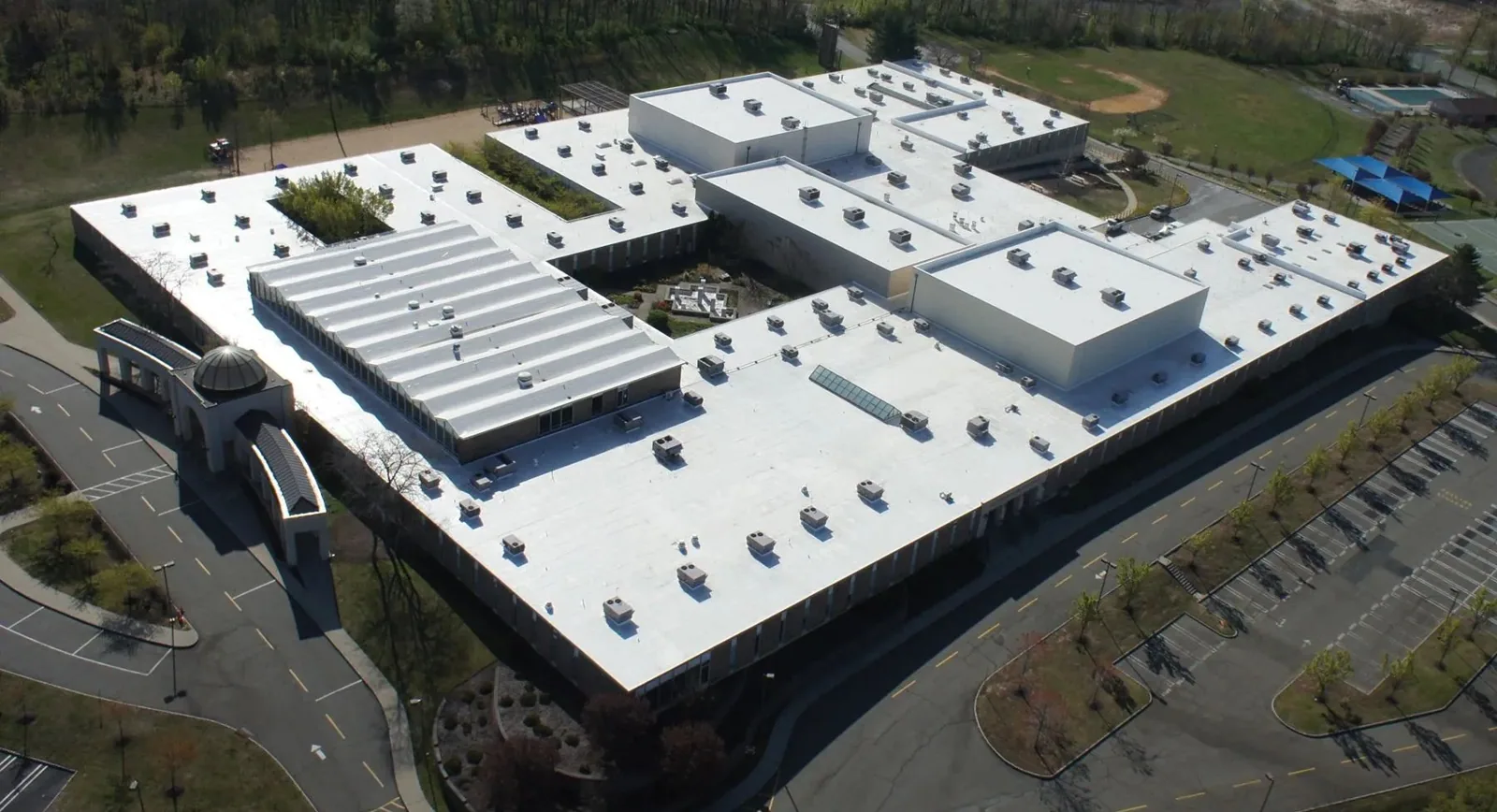
A single-ply roof is lighter and faster to install, and its weak points are seams and flashings. A white TPO sheet is welded with hot air, so the seams must be clean and dry. Probing every seam on the walk finds the open ones, and a cover strip over a re-welded lap makes the repair last.
The same discipline applies to flashings. Wall bases, curb corners and pipe boots are rebuilt with compatible accessories, bonded to a clean substrate and finished with termination bars sealed at the top. Where a prefabricated boot fits, we use it, and where one does not, we shape a flashing from sheet stock and weld it in place.
How does Federal Way rain affect the schedule?
Rain is the working constraint, from the first heavy showers of fall through the long wet winter. Summers in Federal Way never average above 71.6 F, so heat is rarely the problem. Wet surfaces are. From the first heavy showers of fall, an open deck is the exposure, so insulation is covered and every cut edge is sealed the same day it is made.
Each day's opening is limited to what can be sealed by evening, and we avoid starting asphalt-based work on a wet deck. Moisture trapped between plies is a slow leak waiting to happen, so a damp deck is dried or the work waits, and the moisture reading is logged beside the section number for the file. On a long job, the dry months carry the heavy tear-off and the wet months carry repairs, drains and small sections.
Fall is when the planning tightens. Crews finish open sections before the November rains, install temporary seals where a job must pause and tag every open detail on the plan so the next dry day starts with a known list.
Which Federal Way buildings call for which approach?
Healthcare is led by St. Francis Hospital and a Virginia Mason medical center, and a hospital roof favors low-odor methods, strict dust control and a plan for the air intakes. Retail on Pacific Highway South, the city's main commercial strip, is often a single-ply job, since a retail roof tends to carry many units and curbs that a welded flashing handles well.
New industrial work at Woodbridge, where Industrial Realty Group is adding buildings on part of the former Weyerhaeuser campus, has no repair history yet, so the first walk records a baseline. Occupied building reroofing in any of these settings uses the same sequence: tear-off limits, staging, dry-in and a closeout walk with the facility lead.
Schools are another building type that runs on a calendar. School roofs follow it, with large work in summer and repairs on weekends or breaks, and notice goes to the principal and the facilities office.
What does the owner keep at closeout?
The owner keeps the photo set, the repair log and the marked plan. If the roof has a manufacturer warranty, the file records its terms and notice rules, and repairs follow the published method for the system. Warranty terms are the manufacturer's, and we read them before we touch the roof.
For owners comparing systems before a replacement, Johns Manville and Soprema offer comparable asphalt-based and layered systems, and the walk will show which suits the deck, the drainage and the budget.
Commercial Roofing Questions
Can a modified bitumen roof be repaired in cold, wet months?
Small repairs can, with the right materials. Cold-applied patches and self-adhered flashing strips are made for lower temperatures, but the surface must be dry and clean. Larger repairs wait for a dry window, and the crew installs a temporary seal first.
How do I know if my roof is a candidate for a recover?
Core cuts and a moisture scan decide it. If the insulation is dry and the deck is sound, a recover can work. If either is wet or rusted, the roof comes off. We also check wall heights and drain levels, since a new layer raises both.
Is torch-applied roofing allowed on occupied buildings?
Many occupied buildings prohibit open flame, and the owner's insurer may too. When torch work is allowed, we use fire watch, extinguishers and a cooling period after the last flame. Where it is not allowed, cold-applied or welded systems do the job.
What should I check after a windstorm?
Start at the perimeter. Look for lifted edge metal, loose cap sheet at the edges and displaced gravel. Then scan the field for billowing or torn laps. Small lifts are quick to fix, but an open edge in the next storm can peel much more roof.
Does the manufacturer inspect repairs?
Some manufacturer programs include inspections and others do not. The warranty letter says which. Either way, we document each repair with photos and a dated log, so the owner can show what was done if the manufacturer asks.
Send the roof plan and the layer details
Send the GC's roof plan, the age of the system and any warranty letter. We will walk the deck and tie-ins with your superintendent and name the layers before we put a price on the work.
