
Roofing Manufacturers
Soprema Roofing in Federal Way, WA
On a Soprema roof, the superintendent looks first at the details, because the manufacturer is known for modified bitumen membranes and for liquid-applied waterproofing products used at awkward spots. A roof in Federal Way, WA that carries one of its assemblies may have rolled sheets in the field and a liquid-applied resin around the penetrations. The two work together, and a repair has to respect both.
Our work on these systems follows the published detail for the product on the roof, once a walk and a core cut have shown what is there.
How is a modified bitumen assembly built and repaired?
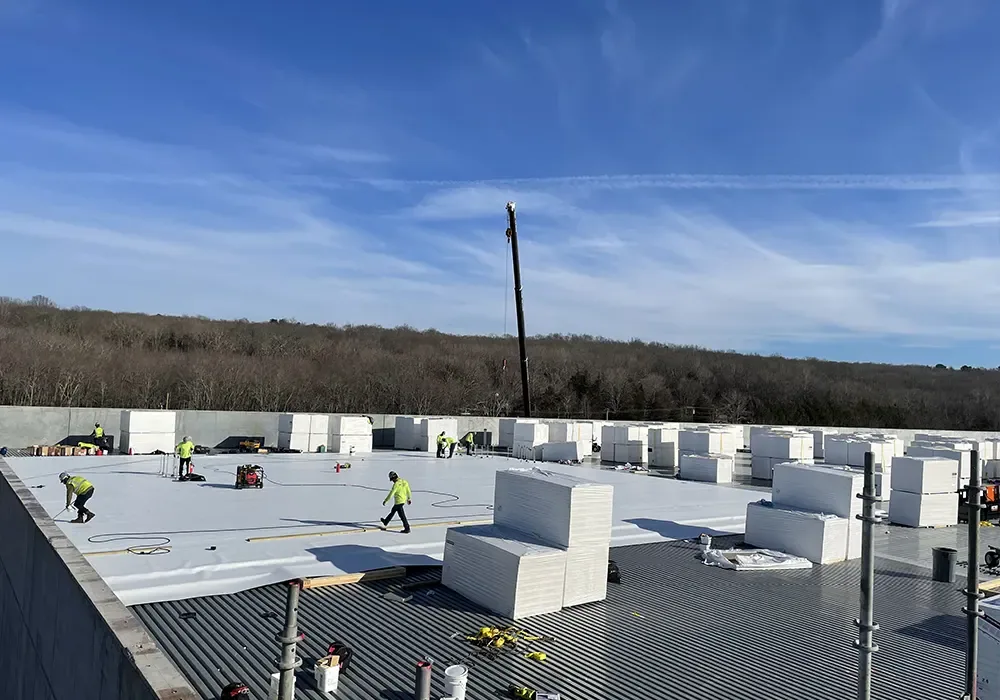
A modified bitumen roof is built in layers: a base sheet, one or more plies and a cap sheet with a granule or coated surface. The sheets are joined by torch, hot mopping, cold adhesive or self-adhesive, depending on the product and the building's fire rules.
Repair starts by finding the failed layer. A blistered cap sheet may sit over a sound base. A split at a lap may be caused by movement. We cut out the failed area, dry the substrate, install new plies lapped over sound material and finish with a matching cap. Laps are staggered, and every repair is photographed with the section number visible.
Surface condition tells a story. Granules gathered in the gutters suggest wear on the cap sheet. Cracking at a lap suggests movement. Alligatoring suggests the coating is aging. Each gets a photo, a section number and a note on whether the repair is a patch, a new cap or a replacement. A cap sheet that has lost its granules down to the asphalt at a drain or a curb is photographed up close, because bare spots mark where the next leak will start.
Where does liquid-applied flashing earn its place?
Penetrations, curbs and irregular corners are hard to cover with a rolled sheet. A liquid-applied flashing resin cures into a continuous membrane and flows around pipes, brackets and corners, leaving no lap to open. It is brushed or rolled over a primed, clean substrate, often reinforced with fabric.
The work needs dry weather and a cure time, and it must bond to what is under it. We clean, prime and test adhesion on a small area before committing. In the wet season, we cover the area, record the cure window and return when the forecast allows. The result is a flashing without seams at the places where leaks often start.
Compatibility is the quiet risk. A liquid resin on a dusty or oily surface will lift in a season, and a resin over an incompatible old flashing may not bond at all. The adhesion test is cheap compared with a second visit, and it goes in the file with a photo of the test spot.
What do heat and open flame mean on an occupied building?
Heat-applied systems bring fire risk, odor and noise. Torch work needs permits, fire watch and a cooling period once the work stops, and many occupied buildings do not allow it. Self-adhered and cold-applied alternatives avoid the flame, and the choice is made with the building owner, the insurer and the facility lead.
We map air intakes before any heat-applied work, and we cover or relocate them with the facility's consent. On roofs over healthcare space or care facilities, we choose low-odor methods. The plan names who calls a stop if smoke or odor reaches an interior, and that person has a phone on the roof.
Cool-down is a safety step as much as a courtesy. After heat-applied work, the crew checks the work area and the deck below for hidden smolder, and a final walk with the facility lead confirms the roof is cold before the crew leaves.
How does the Federal Way rain change the plan?
Moisture trapped between plies is a problem for years. Tacoma, to the south, logs roughly 155 wet days a year, and a deck in this part of the Sound is damp often enough that the moisture meter comes out before any ply is laid. Most of Federal Way's rain falls between October and March.
So a layered roof is not installed over a wet deck. The crew checks moisture, dries the substrate and seals each day's open area against rain before leaving. Large replacements take the dry months, while wet months handle small repairs, drains and inspections, with temporary seals wherever a job has to pause.
Where do these systems show up around Federal Way?
The Port of Tacoma owns more than 2,400 acres of terminals, warehousing, distribution and manufacturing, and Fife's economy leans on warehousing and industrial facilities that the port, I-5 and Highway 167 attract. A layered roof suits a busy site where foot traffic around equipment is frequent.
The Tideflats and Fife walk plans focus on edges, drains and the condition of the cap sheet at laps. Closer to home, Pacific Highway South retail and Woodbridge industrial buildings get their own plan, but the same layer log and the same pull tests apply.
Tie-ins to older roofs need their own thought. When a new modified bitumen section meets an old built-up or single-ply roof, the joint is a movement line, and we use a flashing detail and a termination that can flex. The tie-in is the first thing the superintendent checks at closeout, followed by a look at every liquid-applied detail for pinholes and thin spots that a gloved finger would catch.
What does the owner receive at closeout?
The owner receives the layer log, the photo set and the repair record, with a note on which areas used liquid-applied flashing and which used rolled sheets. If the roof has a manufacturer warranty, the file holds its notice and repair terms, and repairs follow the published method.
GAF and Johns Manville also supply layered commercial systems, and the walk shows which one suits the deck, the drains and the budget. A coating restoration may suit a sound roof with a worn surface.
Commercial Roofing Questions
Can a liquid flashing go over an old flashing?
Often yes, if the old flashing is sound, clean and compatible. The surface is cleaned, primed and tested before the liquid goes on. If the old flashing is loose or wet, it comes off first, because a liquid layer cannot hold a failing base.
What does a blister in a cap sheet mean?
It means trapped air or moisture. A small blister over dry material can be cut and patched. A field of blisters suggests moisture in the plies, and cores and a scan tell us how far it goes. Cutting a blister without checking beneath it is how leaks start.
Is torch application safe on my building?
It can be, with permits, fire watch and a cooling period, but many owners and insurers rule it out. We ask early, and if it is not allowed, we use cold-applied or self-adhered rolls. The roof performs the same when the product is applied well.
How long should I leave a liquid-applied flashing to cure?
Follow the product's cure time and keep rain off it until it sets. In wet weather, that means a cover and a delay. We record the application time and the cure check in the file, so a later question has an answer.
Can a modified bitumen roof be coated instead of replaced?
When the plies are sound and dry, a coating can restore the surface and extend service life. Cores and a scan decide. If the insulation is wet or the plies are delaminating, coating only seals in the problem.
Send the roof plan and any product data
Send the GC's roof plan, the age of the system and any warranty letter. We will walk the details and the laps with your superintendent before a price goes on paper.