Roofing Capabilities
Multi-Site Roof Programs in Federal Way, WA
A multi-site program begins with a map and a stack of addresses. The superintendent drops each building on the map, marks the I-5 exit nearest to it and sorts the list by drive time and by roof condition. That sort tells him which buildings can share a mobilization, where the lay-down yard can sit and which roofs cannot wait for the next dry window.
For owners in Federal Way, WA who hold buildings across the south Sound, the program turns many separate roof calls into one calendar with one report format.
How does a program start?
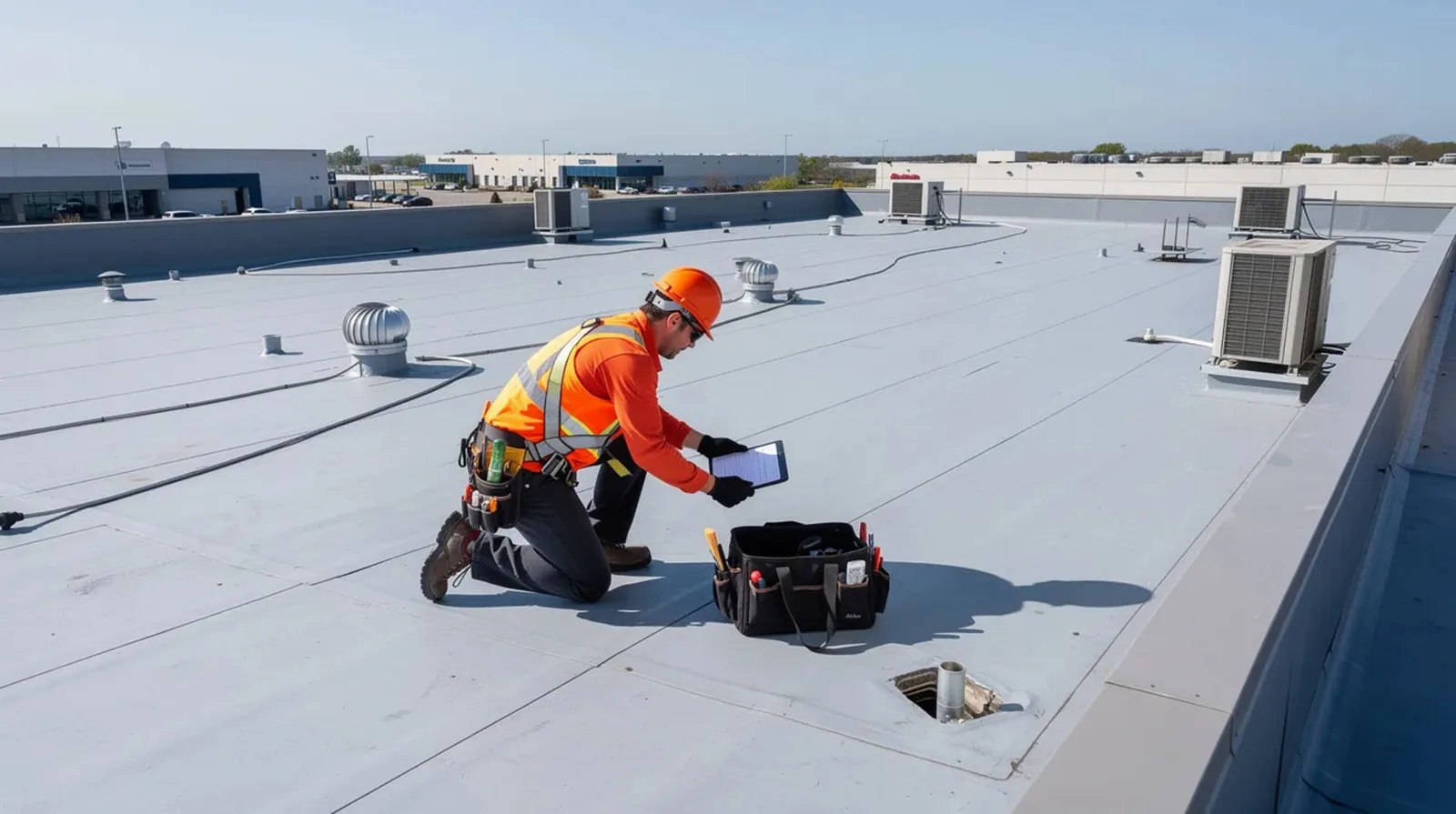
The first month is a survey month. A crew walks every building in the order the map suggests, numbers the roof sections, tags the drains and rates each section. The ratings land in a single sheet, with the photos filed under the same numbering on every building, so a manager can compare a Kent warehouse with a Federal Way retail roof on the same scale.
The sheet then sorts itself into three lists: roofs that need work now, roofs that need work this year and roofs that are steady. The program schedule grows from those lists. Each building also gets a written condition report in the same format, which makes the first board meeting a short one.
Owners are asked for three items at the start: the building list with addresses, any roof drawings or warranty letters, and a contact at each building who can open the roof hatch. A missing item does not stop the program. The first walk produces a marked plan, and the contact list fills in as the crew leader visits. That first walk also fixes the numbering scheme, so section three of one building means the same thing to every crew that follows.
How are buildings grouped across the south Sound?
Groups follow the road, not the zip code. I-5 reaches Federal Way at exits at 348th, 320th and 272nd Streets, and SR 99, Pacific Highway South, runs through the city's main commercial strip. A crew working retail roofs on Pacific Highway South can reach a Kent Valley warehouse from the same I-5 corridor, and Fife draws freight forwarders because of the Port of Tacoma, I-5 and Highway 167.
The Port of Tacoma Tideflats is its own group. The port owns more than 2,400 acres between the Hylebos and Blair Waterways for terminals, warehousing, distribution and manufacturing. Terminals, rail and warehouse traffic share that ground, so we schedule roof work for days when trucks and cranes can share space safely. Fife and Kent follow in their own blocks.
How does the wet season shape the program calendar?
The year splits by rain, and the program calendar follows it: the corridor around Auburn peaks in November and December and goes nearly dry in July, while Tacoma sees roughly 155 wet days. Federal Way's wet weather runs mostly from October through March.
So the dry months carry the big tear-offs and recovers, and the wet months carry repairs, drain work, inspections and small sections. A program that tries to replace six roofs in January pays in weather holds. A program that replaces them in June and July spends the winter on preventive maintenance, which keeps leaks from stacking up.
Can details stay consistent from building to building?
They should. The program writes a short detail sheet for the details that repeat: curb flashing, drain boots, edge metal, pipe penetrations and wall tie-ins. The same crew leader or the same trained team applies them on every building, which makes repairs look and behave alike. When a leak appears, the file tells the next crew exactly how the detail was built.
Standard details also simplify purchasing. The same membrane, adhesive and sealant stock can serve many roofs, and the lay-down yard stays tidy. For a property manager with a mix of roof systems, the sheet notes where the standard has to bend, such as a different membrane or an older base layer.
Training matters here. A detail sheet is only as good as the people following it, so the crew leader walks each new team member through the details on a real roof before any live repair. Pull tests on the first few fasteners of every job confirm that the deck holds what the sheet assumes. If a deck fails, the sheet bends and the file records why.
What happens when one building has an emergency?
The program gives emergency work a head start. The roof plan, section numbers, drain tags and past repairs are already in the file, so the crew arriving for an emergency roof repair knows where to look before reaching the ladder. They place a temporary seal, photograph it and report back to the program lead.
Wind events work the same way. After a big storm, the program lead pulls the list of buildings with open edge items and sends crews there first. With edge notes already on every roof, a program can answer a storm such as the one that hit Enumclaw at 74 mph in November 2024 by triaging on risk instead of phone call order.
What does the owner see each quarter?
A one-page summary per building and a one-page rollup for the portfolio. The rollup shows ratings, open items, repairs closed and the next walk date. A property manager reading it can see in a minute which buildings changed and why. The detail sits behind each line, in the asset file.
The same rollup feeds the capital plan. When a roof's rating drops, its replacement year moves in the plan, and the owner sees the budget effect before the next fiscal meeting. The superintendent walks the rollup with the owner at each closeout walk.
Retail and warehouse owners read the rollup differently. A retail manager looks for tenant impact lines and the dates of loud work, while a warehouse manager looks at dock schedules and drain status. The rollup carries both views on the same page, and each building's lead gets only the lines that concern him, so nobody sorts through another building's repairs to find his own.
Commercial Roofing Questions
How many buildings does a program need to be worthwhile?
Three or four is where the savings start, mostly from shared mobilization and one report format. Below that, a standing inspection schedule does the same job. Above ten, a program is the only practical way to keep the whole list current.
Can a program include buildings with different roof systems?
Yes. The rating scale and the report format stay the same while the checklists change by system. A single-ply roof gets seam probes, a built-up roof gets blister and ply checks, and a metal roof gets fastener and panel checks. The rollup treats them all alike.
Who is the single point of contact?
A program lead, usually the crew leader who ran the first survey. He holds the master calendar and the rollup, takes the calls and knows the buildings. Continuity matters, because a crew leader who has walked a roof twice finds changes faster than a new one.
How are repairs approved across many properties?
The program sets a limit up front. Repairs under the limit go ahead with a photo after; repairs over it wait for the owner's sign-off with the photo and scope attached. That keeps small leaks from waiting on a meeting.
What if the owner sells one of the buildings?
The building's file leaves with the sale, and the program continues without it. A buyer reading the file sees the ratings, repairs and photos, which supports a due diligence roof survey if one is needed.
Send the building list and the map
Send the GC or owner's building list, addresses and any roof plans so we can walk the sequence, staging and tie-ins with your superintendent before a number goes on paper.